I knew fame and friendship can intersect in various ways. It collided unexpectedly, preventing Vasan and I from meeting each other in person again.
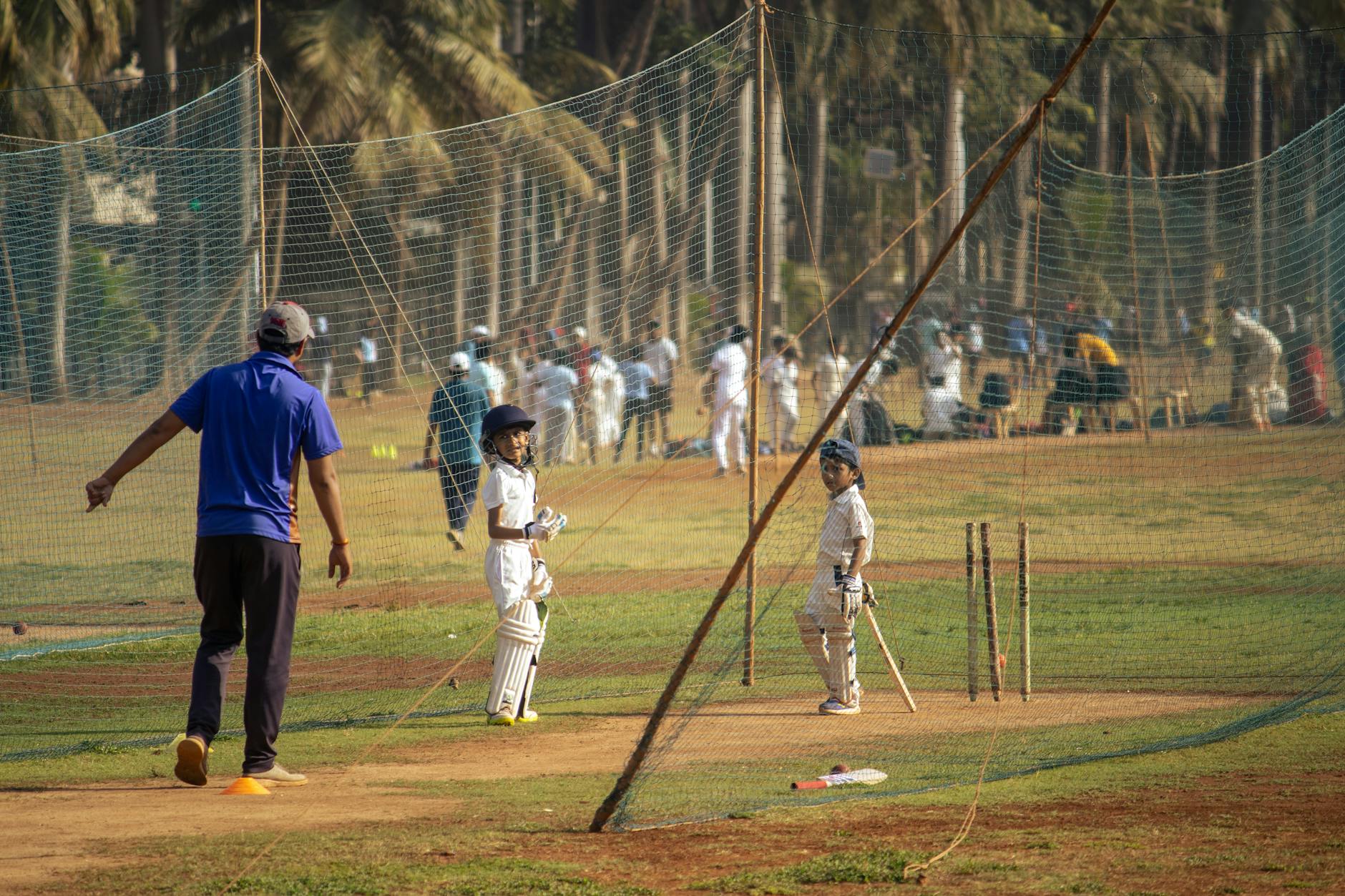
My first introduction to Vasan happened on the elementary school grounds during recess. He and his buddies were playing cricket which I knew nothing about. It was the first day of our fourth-grade class in Fort elementary school. Vasu, as everyone used to call him affectionately, was an all-rounder—he could bat, bowl, and field well. He was an opening batsman, bowled both pace and spin as best as an eight-year-old can, and fielded at the slips.
Until fourth grade, I had lived in Delhi with my uncle and attended an elementary school there. In Delhi there was no cricket either in our school, or in our neighborhood. We played hockey and football; both were popular with the kids. The rules of the game were also simple to understand and follow. When my uncle retired, we all moved south to Trivandrum, a small city more than two thousand five hundred kilometers from Delhi. We settled down in the Fort subdivision of the city.
It is difficult for seven-year-olds to play any game that requires good motor skills—hand-eye coordination, muscle strength, quick reflexes, and an ability to perform short sprints and turns. Vasan was tall and big for his age but I was one of the smallest kids in my class. It made playing games even more challenging for me. But we all tried to compensate for our lack of strength and stamina with our interest, enthusiasm, and motivation.
I started out as a fielder. I could run but couldn’t throw the ball to the bowler or the wicketkeeper from the depths of the field. So, a long-on or long-off, or even a deep mid-on or deep mid-off fielding position wouldn’t work for me. Vasan accommodated me in the second slip position near him. He would always be first slip when he wasn’t bowling and when he bowled, I would move to first slip. Vasan was the reigning captain our class team when we played against other classes. My batting and bowling were a joke initially; I couldn’t score a run or take a wicket unless I got extremely lucky. But I found playing cricket fun, and Vasan patiently taught me and coached me during class recess, and later on in the playground near our homes. We stayed two blocks apart and played pretty much every day in the neighborhood park grounds in the evenings. He trained me in both offensive strokes and defense, and also in spin bowling. Over a period of a few months, I learned the rudiments of batting, spin-bowling, and catching the ball in the air.
In Delhi, I learned to ride only the tricycle. With three wheels it remained stable on the ground and I had no problems riding it inside the house. Vasan already knew how to ride a bicycle. He owned one but it was bigger for me. We rented a smaller twelve-inch bike and he taught me how to ride it. There were no training wheels for bikes in those days. Vasan and another friend SK would hold the bike for me till I learned how to balance it and pedal. In the process, I fell a few times but escaped with minor bruises. By the start of fifth grade when we all moved to Central High School near the East Fort, Vasan had become my best friend by a mile.
In fifth grade, there were three class divisions based on the medium of instruction, the language in which science and social studies courses were taught. Division A was the Malayalam medium, division B was the Tamil medium, and division C was the English medium. There were conflicts, competitions, and contradictions among the three divisions. Apart from this, there was the traditional bullying. A and B divisions had also a few students who had been detained in the same class for an extra year or even more. Naturally, they were older, and bigger for the grade they were currently in. They could easily bully kids like me who were much smaller. Fights would break out intermittently, but Vasan was always there for me and protected me from the bullies. He had a knack for dealing with guys even bigger than him. He never picked up a physical fight with them but somehow managed to give the impression that it is not a good idea to mess with him; it could turn out badly for the others. Later on, I came to know that Vasan’s older brother was a trained boxer. A local goonda had tried to rob him by pulling out a knife. Vasan’s brother punched him so hard that the rogue fell down and cracked his skull. The news had spread through word of mouth. But I never asked Vasan about it though.
There was this fifth grader who used to taunt me frequently. He was a bigger guy and I always tried my best to avoid him. Trying to pick up a fight, he cornered me one day and said in a mocking tone—Your mom is cute; I want to date her. I was embarrassed, and my face reddened. I suddenly saw Vasan approaching him. I thought he was going to punch the kid but Vasan just stood face to face, raised his voice and said—You can date my mom; she is not very cute but will pick you up from school tomorrow. And he continued, she will then knock all your teeth off. Your permanent teeth will not come back but the milk teeth will be replaced. You will look so strange that you will be a good replacement for the Amazon forest monkey the city zoo lost recently. My mom is a zookeeper and she will put you in that cage that has just opened up. When kids visit the zoo, they will have lots of fun with you there. Saying this Vasan took my hand and led me away. The kid did not show up in class for a whole week, and never ever crossed my path after that.
Vasan had quickly learned how to swim in the Olympic-sized public pool that had come up in town recently. His older brother had taught him. Vasan took me to the pool one day offering to teach me swimming. I believe this was when we were in seventh grade. The shallow end of the pool was three feet deep, and the deep end eighteen feet. I believe I was four and a half feet tall, and Vasan was almost five feet then. He led me to the deep end, asked me to wait on the curb and jumped into the water. Anchoring in one corner of the pool he took a deep breath. Then holding his breath and as if digging up the water with both palms he went down, touched the floor of the pool, and then pushing up with his hands bubbled up to the surface elegantly. He then told me it was my turn and asked me to get into the water feet first hanging on to the curb. He instructed me to keep to the wall, go down, touch the bottom of the pool, and come up as he did. I took a deep breath and did as I was told. Halfway up I felt breathless but somehow managed to keep my cool and bubble up. But I got scared. My swimming lessons with him ended then and there. But we continued to be best friends.
Vasan had a good voice and could sing Kollywood, and Bollywood movie songs with ease. He also started taking lessons in Carnatic music vocal, and also the violin. I also tried my hand at violin but gave up quickly; I didn’t have the talent or motivation to continue. After a year of training, Vasan’s teacher encouraged him to give a performance in the All-India Radio station. Vasan gave a stunning performance, and he became a celebrity in school.
For athletics, we could earn one star, two stars, or three stars based on our performance in one hundred and two hundred meters sprint, high jump, long jump, and cricket ball throw. We started training together and by the end of six months, Vasan was running one hundred meters under thirteen seconds, two hundred under twenty-five, clearing four and a half feet in high jump and fifteen feet in long jump. He could also throw the cricket ball over sixty meters. These performance measures placed him close to a two-star level. My timings and distances were much more modest—one hundred meters under fifteen seconds, two hundred meters below thirty seconds, three and a half feet high jump, and twelve feet clearance for long jump. All these would have qualified me for one star if I could also throw a cricket ball over fifty meters. However much I tried, I could only clear thirty meters, a really poor performance. By the time we entered high school, he had earned two stars while I had none.
During middle and early years of high school Vasan and I walked three kilometers each way to the YMCA in the heart of the city to play ping pong. We also got about ten minutes of coaching two days a week for our efforts. Here was one game where I could really compete with Vasan and beat him frequently.
We were good students and loved science and mathematics. We studied together for tests and got together to work out challenging math problems and pursue complex science projects. We would go to our science teacher’s house over the weekend with questions and she enthusiastically encouraged us to take up difficult competitive projects. During one of our visits, she plucked a red chemparuthy flower from her well-kept flower garden in the front yard where we were standing and chatting. In class, she had been teaching us parts of a flower. She started discussing and pointing to the different parts of the flower—petals, stamens, and pistil. Flower anatomy intrigued and excited us, and Vasan started asking all sorts of questions about pollination and such. Suddenly the teacher’s adolescent teen daughters also barged into the conversation, the learning dynamics changed, and the excitement and animation grew. The girls started giggling instantaneously. We would look at the flower parts and exchange glances with the girls. The teacher was not particularly amused by the unintended change in the learning environment, and she shooed her daughters inside. Naturally, Vasan and I were disappointed.
On our way back from the science teacher’s house I noticed that Vasan was in high spirits with red streaks and reddish hues radiating all over his face. Suddenly he started reciting—
Stamens and Pistil living together in the same big red flower
What a wonderful life!
I was also initially elated but when he started repeating the lines intermittently all the way back to our homes, it started feeling like the replay of an advertisement heard frequently on the radio. In school, during class recess the next day, Vasan showed me a poem he had written. I can only recall the following lines—
From her flowering, sprouting bust
Emerges her long slender neck and giggling face
Stamens and Pistil living together in the same big red flower
Vasan and the science teacher’s teen daughter
Living together in the same little red house
What a wonderful life!
Flower anatomy and the mechanics of pollination were all the sex education we got in school in those days. In high school, we won some state awards which brought recognition to our public school and kept our teachers happy.
With some of our classmates and neighborhood pals, we played some strange but interesting games that seem to have almost gone extinct these days. They are neither represented in the Olympics nor being played by the city kids in this day and age. One is hide and seek which we used to play with gusto in the neighborhood park. It is a natural game which doesn’t require any equipment. Though I don’t see children playing it in public spaces, my guess is that it is still being played inside homes and backyards. I don’t see anybody playing with marbles or tops either, these days. We used to play these a lot in our younger times. They have practically become extinct.
Two other games which I am nostalgic about are the stick and spindle, and the seven tiles. They were never popular outside my state in those days and sadly, I don’t even see children of my hometown play these games now. The stick and spindle we shaped from a tree branch and a piece of soft wood. The stick would be typically a foot and a half to two feet in length and about an inch in diameter. The spindle is about six inches in length, two to three inches in diameter, and tapered at the ends. You could say the game is a version of the poor kid’s golf though we had never heard of golf growing up. A hole is dug in the ground and the spindle is placed across it. With the stick, the hitter digs out the spindle and sends it flying. If a fielder catches it in the air, you are out. Otherwise, the fielder retrieves it and throws it towards the hole which you can defend with the stick. The runs are measured by spindle lengths. When the fielder manages to throw it into the hole, the hitter is declared out. Otherwise, the hitter can tap on one end of the spindle with the stick to make it jump, and then hit it. The game can be played by two teams like cricket or baseball or as an individual game—the hitter versus the others as fielders. Vasan used to be quite good at it; I wasn’t.
The seven tiles game is played between two teams using a tennis ball and seven circular or rectangular tile pieces which can be stacked on top of each other to make a tower. The tiles can be shaped out of wooden or ceramic pieces or stone tiles. Once the tower is set up one player of a team throws the ball from a set distance at the tower, trying to dislodge the tiles and reassemble the tower. In the meantime, if an opponent team member catches the ball, throws the ball and hits you, then you are declared out. Vasan and I enjoyed playing this game very much.
Chess didn’t fascinate us but carroms did. Teaming up, Vasan and I aced the school-wide carroms tournament, and won the first prize. Vasan deserves more credit for our success.
It would appear strange that most of my classmates chose the engineering or pre-med track after high school. Vasan went to an out-of-state engineering school and I joined the medical school in town. Vasan’s family soon moved to a different city. It was the end of our friendship as we knew it.
After medical school, I went out of the country for further studies and training. Whenever I visited my hometown, which happened infrequently, I heard that Vasan’s extracurricular career had taken off. He was getting recognition for his musical talent and becoming known as a singer, songwriter, music composer, and fiction writer. I thought of visiting him but somehow or the other it kept getting postponed and just didn’t happen. By that time, he had become a celebrity, and the thought entered my mind that it was probably not a good idea to bother him and rekindle the old friendship. What if he just brushed me off politely because of his busy schedule? Or, he might be moving into a totally different artsy and musical circle that he would no longer care about an old friend from his very early school days. These were the thoughts that were roiling me, and I kept putting off contacting him though I very much wanted to be face to face with him, and exchange some old banter. Unfortunately, it never materialized.
There comes a time in one’s life when you can no longer afford to continue to procrastinate and keep on postponing getting in touch with or meeting old friends or extended family members. Our son’s wedding reception was to be arranged in Chennai as the bride was from that city. I came to know from childhood friends that Vasan was settled in Chennai, and a couple of those old buddies were in touch with him.
An era had gone by. After many decades of leaving our old school, I cold-called Vasan one early cloudy morning. I was sitting at my dining table with my usual cup of Darjeeling tea. He picked up the phone but sounded sleepy as though he was just waking up. I addressed him, Vasu, like in the old days, and we chatted as though nothing had changed, and time stood still like a big rock fossil. We reminisced mostly about old times, talked about our respective families, but kept his celebrity life out of the conversation. He probably assumed that I knew all about his musical and writerly accomplishments, which was only partially true. I invited him to the wedding reception, and he promised to come.
He came by himself, chauffeured, in a BMW sport utility vehicle. He had at least three inches on me and a head full of hair. He is the same old Vasu, I tried to tell myself. My hairline had receded but he told me I hadn’t changed much. We hugged and sat down in a corner of the lobby to chat. I noticed that the eyes of the hotel staff were trained on him. Soon the manager came down, greeted him, and asked if we would like to have tea, coffee, juice or snacks. We settled for plain water.
We mostly dwelt on the present, his present. Over the phone, before we had seen each other, we talked mostly about the past. I was surprised by his current calibration regarding his rank, position, and status in the music and art world. When I gently probed, he rated himself numero uno as a composer and musician, and as a good writer too. Catching possibly a ray of surprise in my facial expression, he added—it is my honest evaluation. People started noticing him and came closer.
A queue was forming mostly of young women looking for autographs. Some of them were carrying Vasu’s latest best-selling novel, Chila nerangalil chila paravaikal, Some moments, some birds, for his author signature. Their faces radiated joy, curiosity, and anticipation.
I knew it was time to leave him alone and let him bask in his fan adulation. I was almost tempted to ask him—Vasu, do you remember the time we went to our science teacher’s house and learned flower anatomy in the presence of her giggling teen daughters? I didn’t ask; I also needed to attend to other guests. He quickly took leave after the reception got over.
We never met face to face after that. And we rarely discussed the present. We talked over the phone many times—about our old school, about the pranks we played on our teachers, about growing up, about the games we played, about flower anatomy, and about all the other shared good old times. But on some days, I feel that it is because of my jealousy that I am reluctant to meet him in person, and chat with him face to face.
About the Author:

Subramani trained as a physician in India and moved to the US to pursue a PhD in Artificial Intelligence. After teaching graduate students and medical students at Vanderbilt University and the University of New Mexico for more than a decade, he started writing, feeling the urge to share the memories of certain life experiences and perspectives which could not be done within the bounds of normal day-to-day interactions. He believes that honest story-telling can change us, and our world for the better. His stories have been published/forthcoming in The Charleston Anvil, Umbrella Factory Magazine, New English Review, Fairlight shorts, and The Phoenix, among others.


 The Hemlock Journal
Leave a comment