My father, Georgie, told me days before he died that my grandmother had delivered a baby out of wedlock, that my great-grandparents had raised the boy. My dad had not known until he was sixty that his Uncle Roy was actually his brother Roy.
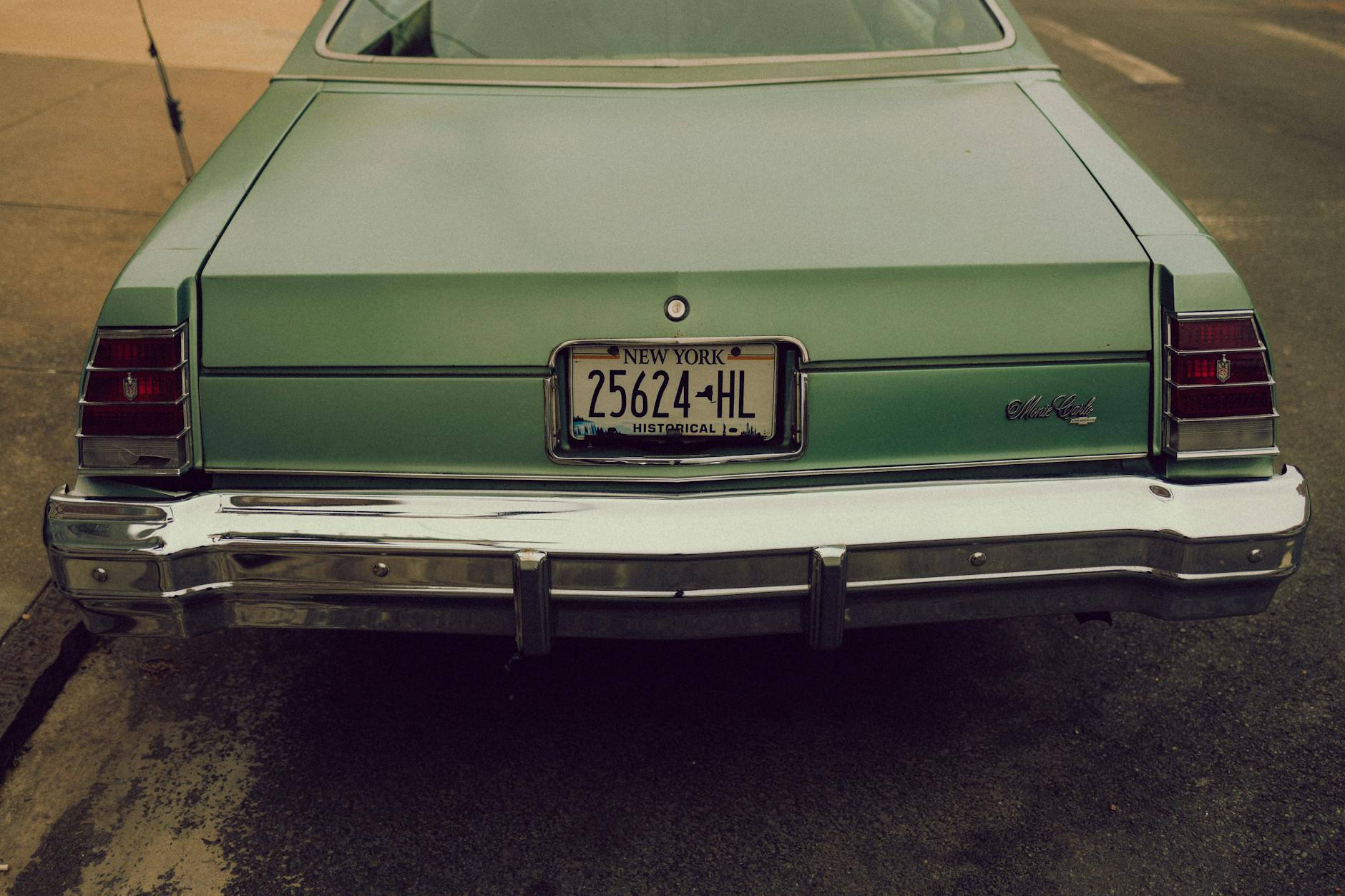
Forty years past the war, I was traveling cross-country in the 1972 Carlo on a last grand tour of the internal combustion engine on a trip across the United States, California to Florida and back. I was out of work, out of prospects, and had survived a heart attack. When I returned, I had promised my wife I would sell the Carlo to some car aficionado who would keep the car in the shape in which I had kept it. My days of spending, both time and money, were behind me.
My son had joined me for part of the trip, but now I was alone for the last few legs, from Nebraska until Nevada. I had two stops to make to visit family I had never met. Being alone seemed the right thing to do.
I contacted my great uncle Roy, who lived on a ranch near Deadwood, South Dakota. Despite being ninety, Roy remembered me, or about me, from an old Kodak photograph sitting on the hood of my 1972 Monte Carlo during the end of the Vietnam war.
I left northwestern Nebraska on Route 71 in the Monte Carlo on a cloudless day that was still cool in the morning. I opened my windows to the prairie air. The car swallowed the highway at a rate that excited me, even though my foot was in control of the pedal. I found myself frequently in the depths of a depressed mood in which time did not pass slowly, but leapt, as if time had stopped and then restarted where it was supposed to be with an abrupt re-entry.
Roy’s ranch was modest, if a ranch at all. While he had some range, a creek about twelve inches wide and a pond big enough for frogs but not deep enough for fish, he did not have enough property to raise many cattle.
When I drove in, the last hundred yards on very old gravel that had swales and washouts, Roy was standing on the porch in jeans and cowboy boots with a red t-shirt hanging from one hand. He had a straw cowboy hat that appeared to hang on a nail that was bent toward the porch floor.
“You see Jesus and his disciples when you drove up?” he said.
I shook my head no and reached to shake his hand. He gave me a weak grip, and I could feel the resonance of the grasp shaking his ulna and radius like a tuning fork.
“That’s my horse, Buster, and those twelve cattle by the pond. I had the cows all named once but they kept shifting how they looked, I gave up and just started calling them the disciples.” Roy kept shifting his feet like his hips hurt.
“It’s hot out here but the porch is better than inside. I don’t use the air conditioning any more, but let’s go raid the fridge and find something to drink.”
The ranchette was falling apart. The skirt apron from siding to soil had rot and holes in it. The porch leaned southward, and the aluminum waffle roofing had holes near every nail, some the size of a dime. The screen door did not squeak as much as moan as he opened the door.
Inside, however, Roy kept the house in good order. Everything shined. The couches and love seat looked clean. The kitchen was in order and the fridge near full.
He popped two sparkling waters.
“You have a very clean house,” I said.
“I try. I don’t have a service come. My boys want me to hire someone but I kind of like to vacuum, and frankly, I don’t make much of a mess any more. Not even in the bathroom. I lost my dog Drunk four years back, and damn, he tracked in dirt and dust from all over.”
“Sorry about your dog.”
“Oh, don’t be. Drunk’s not dead, far as I know. We were on a hike over the mountain you see in the back and he took off after a rabbit and then I didn’t see him the rest of the day. Thought something killed him or he got hurt on one of his jumps. That dog liked to jump, you know. Over the rest of that autumn, I saw him a few times far off, and in the winter he’d come to eat food I’d leave out on the porch, but he wouldn’t come within six feet of me. I’d leave the door open and he wouldn’t even come on the porch to eat. By spring he let me sit on the porch at the other end of his dish while he ate, and he’d be happy when I’d say his name, tail wagging back and forth, but then he’d run off. He’s like me, I guess. Once I moved out here, I was lost, too. Go to town for groceries and used to go to church, but the church got so small, lost its pastor and we were too poor to hire anyone else. Sold the building and the half-acre it stood on. Now it’s a musician’s retreat, whatever that is. By the way, did you see Jesus and his twelve disciples when you drove up?”
I nodded yes this time.
Roy pointed at me. “Tell me about this trip, this car. It’s a beauty. Give me a few minutes rest and we’ll go have a look at it. My hips are shot and I can’t stand for long. You know, I’ve got a picture of that car with you in snow. Sent to me by your grandfather, a decent man. He snuck some pictures and letters to me over the years. You know, those old photos, the colors are all saturated. Each color has a glow as if it were bathed in light at sunset, yellowed and large. But I see that green of your Monte Carlo, and that photo looks true. And the cream top. I like those old hard tops. Must take quite a brush to keep it clean from soot and bird shit.”
He laughed. I supposed it was essential for living alone this far away from humanity.
“Where do your sons live,” I asked.
“Not close, if that’s what you mean. One’s in California, Orange County. Lives near his daughter and her kids. She sells real estate at all hours, high anxiety type. He and his second wife take care of the kids after school. Drains him, but he loves it. He comes once or twice a year. Likes the peace up here. Likes the snow in winter.
My other boy is an overripe apple. He checked in over three-hundred pounds and an alcoholic about twenty years ago. Lost his wife. Lost his kids. Lost his ranch. Lost his blessed buffaloes. Then lost the weight and the booze, but that skin, that skin hangs on him like a sagging sheet. Worse kind of reminder, that skin. I’ve got it all over, too. He can’t look in the mirror and see his new self, you know. But he says it helps him. Reminds him of the vulgar person he had become. Been sober for twenty years now. Ran for supervisor against some gleaming teeth Republican hard-ass woman and lost. He lives in Idaho. Comes to see me about every four, five weeks. Brings his grandson and we have a hole we go fish at, rain or shine. Except I can’t go any longer. But the boys go.
So, you’ve got questions. Spit ‘em out. That’s what you’re here for. How’d you find out about me, your grandma and all?”
“My father. He told me not to tell anyone unless you came forward. But he didn’t want to die without me knowing.”
Roy swallowed twice, as if gulping for air. “You thought I was a great uncle. But I’m just an uncle. Not very great, huh.?
I found myself wishing the pregnancy had occurred out of a sudden romantic tryst. I, the uncle-brother, told Georgie, your dad, that it had occurred from a straight up carnal desire behind the high school one afternoon in the fall when the maples glowed with yellow and red, like the flame that burned in their flesh.
I found my birth father, a scruff of a man who ran a men’s department in Omaha and never married, a whittle of a man who, one day his junior year in high school, not quite drunk, found himself underneath Maura, my mother, your grandmother—see, you have to, what is it, appellate the damn name all the time? Maura was not quite Victorian pure, having been the favorite flavor of the high school marching band’s bugle player that fall.”
Roy stalled, swallowed, rubbed his jaw. “I did feel some relief. Thoughts of incest vanished and rape disappeared. I felt a sudden sympathy for that tipsy boy that became my biological father. I hated Maura, your grandmother, all the same.”
Roy’s face curled up into waves of wrinkles, ready to cry.
“I loved your Dad, Little Georgie. I think I was eight when he was born. Helped your Great-grandma Rourke care for him. Gave him rides. Pushed him on the swing and sang him stupid songs. Taught him a few bad words.
When your Dad would get sick and cry, I was the only one who could comfort him because I would take him outside for a walk. Like a dog. I always thought I was his uncle, but there’s a presence in blood, you know. I felt so close because I was so close. I was his brother in blood, and kept from being his brother. Your dad, on those walks, he would go quiet and just look all over, not fidget, no stare, but look, like he saw things, invisible things, that most of us pass by.”
“So that’s where he got it,” I laughed. “I used to go hunting and fishing with him and you’d think the world stopped. No talking, no hunting, not much fishing, just a lot of looking and listening. Deepening, he called it.”
Roy was silent, and I could see his stomach tightening before he spoke.
“It felt odd to retire in South Dakota, home of the Oglala Lakota Oyate. Your grandmother, my mother, gave birth to me at a home for unwed mothers. It’s a brick building. Owned by an insurance company now. She stayed afterwards in South Dakota to teach Oglala elementary students English at a tribal school. It was to seal the deal. She’d be away for a few years, and my grandparents, your great-grandparents, would raise me as their own, with no shame for my mother.
Your great-grandma Rourke, who I called Mom, she pretended she was pregnant for seven months, then moved to South Dakota to the unwed mother’s home to fake that I was her birth. Forty-seven when she supposedly gave birth to me. I was born to rumors, born to whispers, born to gossip and cruelty.
My grandmother and grandfather, that I grew up thinking were Mom and Pop, took me back to Nebraska when I was a month old and raised me as their son. They passed me off as Maura’s brother their whole lives. But I could feel in my body that I didn’t fit, you know, like an orphan or an adopted kid. They loved me, but maybe it was because they were getting old it didn’t feel right. The body knows, you know, about family, a touch, the way a hug feels, hell, even the lack of discipline. I never got spanked.
Maura, your grandmother, she was only seventeen when she was employed at the school. Stayed four years, and it changed her life. She returned to Nebraska, went to college, became a Normal School teacher. Had a passion for the rights of Native Americans, which followed her when she moved to northern Wisconsin. She had to choose teaching fifth and sixth graders in a small town of Norwegians, Swedes, and Brits, or a mixed class of Lac de Orielle in a small town on a lake flowage. She chose to teach the Lac de Orielle tribal members.
All this grandmother, great-grandmother, father, brother, son, not-son stuff. It’s hard to keep track of what to call them. Wears me out. Confusion in the heart equals confusion of the tongue, you know. Like how politicians speak.”
Roy laughed, started to cry, and coughed back the tears.
“Now let’s get to that car of yours. I owned a 1973 Chevy Nova for twenty-six years, fourteen shades of brown and rust,” he laughed.
Roy used the Monte Carlo like a crutch, walked his way around the car, touching the cream top, the fenders, even leaning over and rubbing the bumpers one would do to smooth out a wrinkle.
“Whose seen more miles, me or the car?” he asked.
I didn’t know what to say. Roy was shaking violently, so I took his arm and we walked to the porch. We sat in the two rocking chairs and reached over and first put my hand on his leg, then took his hand. Roy cried, and I teared.
“Family tree, they call it. But mine was lopped off, you see? Worse than being orphaned. Worse because I knew the whole thing but I couldn’t figure it out. How could my grandmother want me but my mother didn’t? Unnatural. Your sweet grandfather, he wanted me like his own son, loved me like I was a son, and he didn’t know until the night they left Nebraska that I was Maura’s child. All those years he tried to get her to take me to Wisconsin, and she just kept shutting the door as soon as he would open it. Who does that to their own flesh and blood?”
We sat quietly. I said, “Little Georgie, as you call him, my father, when he found out he wanted to go to Nebraska and find you. He said you didn’t want to see him.”
“I know. I spoke with him. I was already living near Rapids City at the time. But I couldn’t see him. I had an open wound, you see, after all those years, still weeping and bleeding, never scarred over. I had never forgiven Maura, my mother.”
“Why did you agree to see me?”
He clapped both of his hands on his thighs and hooted. “Son, life is pretty random at times. A year ago, I played the lottery for the first time, a scratcher, and won ten thousand dollars. Never played since. My neighbor, he belongs to some tribal offshoot of the Oglala, he decided to try it and won a thousand dollars. No one’s won anything since. Pretty random, life.”
Roy paused and exhaled deeply, then sucked in a long breath.
“Really, it’s the car. That’s all I know about you is that damn fine car. That car is from the years I could fix a car. The years of Vietnam, you know. When I loved and hated my country and saw my daughter’s husband come home from Laos missing his right hand. Ruined their marriage. Holy, Holy, Holy God, but I was obsessed with cars. Driving them, wrecking them, repairing them, wrecking them again. I drank and drove and drank again. Had more tickets than wallpaper. Obsessed. They were my out, you see. Towns growing, open space going away, cities reaching out tentacles into the farmland. Raising kids. Even my wife, who I loved all those years. I had to get away. I’d drive. I’d feel hate swelling inside me, and I’d drive. I’d feel love swelling inside me, and I’d drive. Get away, go, be gone. Drive.
So that Carlo of yours. That mint green. I wanted to see it, I guess, as much as see you. Settle this thing, this hatred you know. Give it up before I die, but I had no way to do it. I don’t know how reconciliation works. I don’t know how having been cut off from the family tree and now seeing that other branch works. But here we are. That Monte Carlo. That’s my bridge.”
His hand trembled and he cried again. He had no tears, but his chest convulsed and he could not speak.
We stayed on the porch and he soon fell asleep.
At first, I simply sat in the chair, but got itchy, rose, inspected the house to see if I could do anything for him. The entire house was orderly, neat not in a manner of compulsion but of necessity. There were no sharp corners to bruise a leg, no difficult reaches to items above the head. The spare bedroom had few items that needed dusting, and the sheets were stacked in a dresser in a sealed bag and smelled of fresh laundering. The small entry room in the back had a broom and snow shovel attached to snaps on the wall, out of the way. I was impressed at how prepared he was for his aging.
He woke with a start, said I’d stayed the few hours he was going to give me, but I was welcome to stay and eat supper, if I could. He made two Lean Cuisine in the microwave.
“I’ve got something for you. From Edward, your grandfather.”
Roy went into his bedroom and came out with a small leather box, and opened it about four inches from my eyes. An assortment of oxidized medals and a few military ribbons lay in a silk fabric
“Your grandfather was a fine man, good as they come. He found out I was Maura’s son the night before they were leaving Nebraska for Wisconsin. He apparently took a walk and wailed, came back and told Maura they would bring me with them with their other three children. She wouldn’t hear of it. He loved me, but she didn’t.
He gave those to me when they left Nebraska, I suppose to amuse me, a memento he could probably sneak to me that Maura would never guess I had. Those medals, he was a track star in high school. A sprinter. Hard to believe with how slow he walked. Those ribbons—World War I. He made it to France. Had to lie about some medical condition or another to get in, but the Army was desperate for troops and horses.
It was his way of saying goodbye to Nebraska, goodbye to his life here, not just to me, but that Wisconsin called him to be something else. He’d been the editor of a paper in Nebraska, and now would be a publisher. He served as mayor during the depression. He helped lots of people. A calling, I guess, that he never could have done in Nebraska.”
Roy paused, drew his rocker back, and suspended motion, stayed poised, as if his whole body needed to prepare for what was to come
“I think he was telling me that I had a chance to break my life, too. No more confusion about who was my mom. Maura was never my mother. Grandma Rourke was.
He came back once when his father died, a long drive in an old car. He met me straight up, hugged me, laughed with me, asked all about me for two solid days. Except for getting married, it was the best two days of my life. He said I had to bury Maura and whatever hatred I had just like he had buried his father. Those little grains of dirt on the silk—he added those to the little tin of medals. That’s from the cemetery plot. So, I did. It took me a few decades, but I buried my hate, though that awkwardness I could never get rid of, feeling out of place. Me, the Oglala, cut off from our past, don’t you see?
Those medals, those ribbons, they’re for you. But more, that dirt that I’ve carried around all these years, that’s for you, too. When I spoke with your wife a few days ago to make sure you were coming, she told me about your trip. Went on and on. She’s afraid for you. I can tell she loves you in a soul kind of way. I know you’re trying to make sense of your heart attack and losing your job, disassociated your wife called it, but maybe these medals and this dirt can give you a break from your past and you can see a new future. It was your grandpa’s gift to me. Now you get it.”
At sunset, I got in the Monte Carlo and drove down his long gravel road toward Deadwood and the motel. In the rear-view mirror, I saw his lights blink off before I came to the T in the road, drove for several hours on a dirt road and stopped.
I stood by a thinning creek near the motel. Swallows culled the river, veered, vanished. I laid down near a barn where the wind whistled through the brush. Stars burned. I rose with the moon and walked in the light.
When I reached down and touched the soil of my ancestors, I touched wagon wheel and wing bone, and they whirred ear to ear. I rounded the creek at an oxbow and perceived from ancestor to descendent.
Troubled, pleased, I was ready to leave.
Before dawn, I woke. I turned to the cranes scissoring the purple sky.
My son would join me in two days for the leg from Caspar to Laramie to Reno, then my wife would join me in Reno. I would be connected again.
I had two days to think about Roy and his tortured history. Two days is too long to be alone to brood, but the scarred mountains and the desert plains and an old car promised me just that.
About the Author:
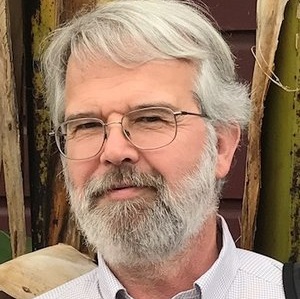
Jeff Burt lives in Santa Cruz County, California, with his wife and a July abundance of plums. He has contributed to Gold Man Review, Williwaw Journal, Red Wolf Journal, and Brazos River Review. He won the Cold Mountain Review 2017 Poetry Prize. Work can be found at http://www.jeff-burt.com.
Click here to participate in the Poetry Writing Contest 2025


 The Hemlock Journal
Leave a comment