My mother is seated in her armchair under her reading lamp, the New York Times open on her lap. I enter the den and see only the back of her head. As always, her silver hair is straight and perfect and shiny, save for a few flyaways which dance in the lamplight.
She sees me and puts the paper down, the crisis in the Middle East never catching her interest as much as her middle-aged daughter’s first morning appearance. “The coffee’s ready, but you’ll need to heat it up,” she tells me, but I already know as this has been the routine.
I walk into the kitchen, pour what’s left into the mug my mom has been leaving out for me. It’s yellow with a black smiley face painted on. Lisa sent it to me after she’d come to see me, soon after I’d moved back to the city. “You look so happy!” my friend had said. “You’re actually glowing.” This made sense to me. I was glowing on the inside as well.
It was October and the weather had not yet cooled. I was still wearing my Birkenstocks, still carrying a sweater in my bag which I rarely had to put on. I was still loving every single thing about New York, a place that welcomed me back, no questions asked, after thirty years away. I called it my New Yor-gasm. I even loved the smell of the subway.
The yellow mug arrived in the mail a couple weeks after Lisa’s visit. The winter weather had officially arrived by then, and we had set the clocks back. The first time it got dark at 4:15, my mood darkened and, without warning, the full weight of my decision to leave Jon, leave Florida, leave the life I’d known for three decades was dumped on top of me, all at once, like an oversized package I had ordered months before but had never received.
I microwave the coffee until it’s how I like it – heated just short of undrinkable, a dot of cream – the same way my mom takes it. I make my way into the den, settling onto the chair opposite her.
When I was living in Florida, I would sometimes call my mother so we could have our morning coffee together. We’d Facetime, she from the same armchair she sits in today, I from my deck, the intense sunlight often making it difficult for me to see the screen.
Back then, there was a lot we didn’t talk about. Now that I’m living with my parents again at forty-nine, nothing is off limits. Even if I tried to hide things from her, I couldn’t. The walls here are too thin.
Today, the conversation stays light. We talk about Tom, the doorman, the only one who has remained in the building since my childhood.
“It’s so weird,” I begin. “When I was a kid he was an adult. But now, he doesn’t seem all that much older than I am.”
“I agree,” she says. “But have you seen that paunch? He’s gained a lot of weight lately.”
We decide that he’s probably around sixty, sixty-five at the oldest. We reason that when he started here he must have been in his twenties but seemed a lot older.
I use the sharp corner of my thumb nail to pick at one of the black eyes on the coffee mug. Half the eye is gone already. It started as a minor, accidental chip in the paint but I can’t help hacking away at it. When it’s gone, I will start on the other one, and then I’ll likely start picking at the smile. I am pretty sure that in the future, this will be a plain, yellow mug, that there will be no evidence that a painted black face ever existed.
My dad, as usual, is sleeping late after a restless night. The tremor in his hands, due to recently diagnosed Parkinson’s, keeps him up. It will be just my mom and I for the next hour or two.
“Incidentally,” my mom says, which is how she starts all topics. “The place I got our pumpkin face masks from is having a sale. Do you need another one?” My mom has never not felt the pressure of a “one day only” internet sale. I tell her that I have plenty left in the jar I already have and she tells me that she hasn’t yet even opened hers.
“Mom, you need to use it!” I urge. I’ve used mine several times. It smells like cloves and cinnamon, has delicate little exfoliating beads in it and gets warm when you wet it and massage it in a circular motion onto your face. “It’s delicious — you’ll want to eat the whole thing off your face. Let’s both use ours today.”
My mom looks concerned. “I wish I could.” She mentions the guy coming to look at the oven at eleven, the trip to Trader Joe’s that she and my dad have planned after lunch, the laundry she’s already thrown into the washer. Once upon a time, it would have frustrated me that my seventy-nine-year-old retired mother couldn’t fathom finding thirty spare minutes in her day. But I understand now – now that I am part of her every day – the importance of the self-imposed to-do list when without it, there would be nothing.
“We’re doing this now,” I insist. “Let’s finish our coffee, put on the masks, set the alarm for thirty minutes, turn off our phones and read.” I’ve been living with my parents for six months so far. I know that soon, I will have a job, a schedule, another place to live. Right now, I am forever finding ways to appreciate the present moment just as my mother is forever finding ways to distract herself from it.
“I don’t want to go into my bathroom to get the face mask because I’ll awaken your father,” she says. “He had a rough night last night and he needs his sleep.”
“Guess what?” I say with an energetic sarcasm that sometimes coincides with the caffeine hitting my bloodstream. “I’m going to let you use mine!”
After I’ve washed my face and applied the mask, my mom’s face appears behind my own whitewashed reflection in the mirror.
“Meet me in the living room after you put it on,” I say, grabbing a book off of my nightstand as I exit. It’s the novel my sister bought for me months ago which I’ve hardly touched. My attention span for reading has been short. For television too. Ask me what I’ve been doing instead and I could not tell you.
Once in the living room, I grab a throw blanket off of one of the two white sofas, snuggle in, turn the phone to silent. The room is flooded with late-morning light, illuminating the various ocean liner paintings, my grandmother’s wooden writing desk, a brass cigarette lighter that’s been in residence since the 1970s, despite the table it sits on having been changed out many times over.
Though the phone is silenced, I’ve set it so that calls from Skylar will ring through. When I left Florida and moved back in with my parents, my daughter had been at her Boston boarding school for two years already. Never did I imagine when I said goodbye to her at the start of her freshman year that I too would soon live in the northeast, that I’d return to the same apartment I grew up in, that I would be playing the in-person role of the daughter again after so many years of just playing the mother.
The book remains unopened as I think about my little girl, who is not a little girl anymore. Still, Skylar’s childhood went so fast that her sixteen-year-old self seems like an accident – like I walked into the other room while a movie was playing and now just need to go back and rewind a little to catch the part I missed. Even in the hospital, right after she was born, the nurses warned me. “Enjoy this time, Mommy! She’ll be in college before you know it.” And here we are; she’s gone already and she’s not even in college yet. Even so, I often tell myself that it’s OK to go off the grid for a while, to not answer her calls and texts the second they come through. But if I’m not that person, that go-to person, who am I to her? And who will get the job if it’s not me? I want it to always be me.
The novel on my lap is about a trans teen from the perspective of her parents. It’s one of those novels that women my age are reading and talking about. To me, it feels like the author wrote it with the intention of someone turning it into a movie or a TV series and this bothers me. I’m sure I’ll be seeing it advertised on Netflix or Hulu within the next year or two. Someone will recommend this series to me and I’ll say, “I read the book and I didn’t love it” as that’s what you say when someone else likes something you don’t. In the past month, I think I’ve read the same page six times over. I will try to make a dent in it today.
When I told people I was leaving my marriage, they wanted a story. There is no story, at least not one with a beginning or an end. If I ever feel compelled to tell one, I think that it will be this: I lied to myself and convinced myself that I was happy enough. One day, I decided to tell myself the truth. That’s it.
I make it through a few more pages but realize that I’m not really paying attention. My mom hasn’t yet come into the room. The mask instructions said to “apply to a clean face.” To me, this meant a quick splash of water. I imagine that she has taken this more literally and is washing her face with some type of cleanser, drying it thoroughly. My mother is meticulous when it comes to following directions.
The story I do sometimes tell to people is not of why I decided to leave my marriage but of how and when. It was early morning, about seven months ago. I had just been out for a run in the neighborhood and was walking home after the three-mile loop. I was thinking, as I often did, about leaving. Recently, I had been thinking about it even more. But it was different this time. It was not so much a thought, but a feeling – a bubbling up.
I will not call my mom unless I’m sure, I’d said to myself that morning. I’d called her on two other occasions, on two previous years, and had told her that I wanted to leave, that I was coming home. I never followed through. I didn’t want to cry wolf a third time. So I hesitated, then watched my hand retrieve the phone from my pocket. My mom answered on the first ring, as is her custom in the morning, not wanting the additional rings to wake my dad.
“Will I be happier without him?” I asked.
She said nothing.
“Please, mom,” I urged.
Three seconds passed.
“Yes, Mandy. Yes, I believe you will be.”
I asked if she would do me a favor and she said that she would.
“If I call you back and say I’ve changed my mind, that I am going to stay, will you please, please not let me? Will you please, please make me leave?”
“I promise,” she said. “I will not let you stay. I will make you leave.”
And there it was. My insurance policy.
“You’ll need to get a lawyer,” I heard my dad say in the background. I hadn’t realized he had been up, listening, and his sentence scared the shit out of me.
I called Jana, my therapist, that afternoon. “I want a divorce more than anything in the world,” I said. I had not said that word out loud, ever. I had not said “divorce.” Not even to my mom or to anyone – not this time, or any of the other times. I had just said “leave” or “come home” or “go to New York for a while”.
“I’m terrified,” I told Jana, and I was. Not of being divorced but of saying it out loud to Jon, and of lawyers. Jana knew that I was never terrified. I asked her what to do.
“I can’t tell you what to do,” Jana said.
“Tell me what to do and I promise I won’t tell anyone it was you who told me,” I said.
“You know what you’re going to do,” she said.
“I do?”
“You do.”
The mask is beginning to dry. The smell reminds me of Thanksgiving and pie and seasonal drinks from Starbucks and all of the pumpkin-flavored things that Skylar likes from Trader Joe’s. And of Skylar herself. My daughter and I share a love of scents, even ones we know are specifically formulated in a lab to evoke feeling. These are the kinds of things she and I talk about.
I miss her.
The night after I talked to Jana, Lisa had called, asked me over for a night swim. This is something she’d ask from time to time but I would never say yes. Jon would not understand why I’d want to leave the house at night and go swimming with a friend. This time, I went.
I had no intention of telling Lisa about my decision. I just wanted to spend time in her pool – to hang out with her, to talk about nothing. But when she started telling me about a purse she bought at TJ Maxx, I could not feign interest. “I’ve decided to get a divorce,” I told her. “For real this time.” Five months prior, I had also told her that I’d wanted to leave.
“Wow,” she said. “How do you feel?”
“ I feel…” I wasn’t sure, and then I was.
“So fucking excited.”
I asked if she had any vodka.
We dried off and she retrieved a bottle of Tito’s from a cabinet. Lisa and her husband, Robert, don’t drink and I imagined that this bottle was several years old, but I didn’t care. I sat on the sofa and sipped vodka with ice from a glass I’d used many times before for water until I felt my cheeks flush. I asked Lisa if she’d sit right next to me on the couch because I wanted to feel my friend smack up against me.
I feel this way a lot now, the desire to feel a body next to mine. Sometimes, I just need a hug from my mom or my dad. Or from Skylar, when I see her, but I try not to push it. “It’s your job to take care of her, not hers to take care of you,” my friend Andria told me, and I’ve been trying to remember this. Andria is also divorced with a teenage daughter. Sometimes, it’s a man’s body I want, which is a different want, but it is only partially about sex. It is what happens right after sex that I crave more. Lying still next to someone, imagining he’s feeling the same feelings I am, yet also knowing that there’s no way he could be.
My mom finally enters the living room. She is carrying the same book I’m reading and I remember that my sister has bought one for both of us. My mom hasn’t made much of a dent in hers either, even though I know she brought it with her on a recent cruise. She’s been distracted too – with my dad’s Parkinson’s, with me. I’ve been doing so well, but sometimes I’m not doing so well and she is affected by this. I can relate. You’re only as happy as your saddest child. And this is new to her. For almost thirty years, I mostly pretended that everything was OK so she’s rarely known me to be sad. I was sad a lot during those decades. I’d like to tell her this, tell her that an hour of crying here and there is nothing in comparison to what it was like before but I fear that this will make her even sadder.
I’ve been reading – or not reading – for almost fifteen minutes now. This is OK. This time is not about the book. It’s about shutting off the phone, about being in the moment. About training my brain to fill the dead air with something positive. About learning to fill the spaces better, the spaces I once filled with thoughts of Jon and our marriage and the concept of acceptance and frustration how much frustration is too much and anger and how much anger is too much and time and wasting time and whether wasting time is even a real thing.
There’s so much real estate in there, in my brain, needing to be reclaimed.
My mom sits down on the other white sofa. We are mirror images of one another, our feet in the middle, our heads facing each other, propped up on matching pillows. The white masks erase our ages and we could be sisters. If Skylar were here, also in a mask, the three of us could be sisters. No, that’s not true. It’s more than just wrinkles that tell your age. It’s the subtle things, the gentle forward curve of a shoulder, even the way you turn the pages of a book. I think about age a lot now, too much. This is because I still think about wasted time, even now that I am certain that I am no longer wasting it. I think about having wasted my youth and, if I’m being honest, my beauty. I hate that I think about this and I’m aware that wasting time thinking about how I have already wasted time is not a deadly sin but probably should be.
The other day, I told my mom that no matter what happens to the two of us going forward, to her and to me, that this time we will have had together makes us the luckiest people in the world. She agreed and we hugged and for one moment, I couldn’t feel where she ended and I began.
“Are you excited to still be with daddy when you’re eighty?” This is the question Skylar asked me on my dad’s eightieth birthday, seven months ago. We had just called my father from the car, on bluetooth. It was an easy question to answer but I didn’t want to. Not for Skylar, not yet.
The next day, I went for that three-mile run, and afterwards, I called my mom and asked her to force me to leave.
I look up from my book and towards my mother and she smiles with her eyes, as the mask won’t allow her face to smile.
“This is the life,” she says.
It is.
And for the next few minutes, both of us are glowing.

About the Author:
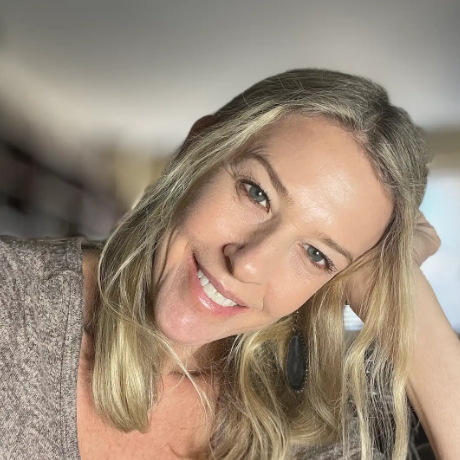
Amanda Klarsfeld is a former community news reporter and have recently finished a memoir-in-stories, as-of-yet unpublished, about my Manhattan upbringing in the 70s 80s and 90s, THE THINGS WE HAVE THAT ARE NOT OURS.


 The Hemlock Journal
Leave a comment