SUBMISSION OPEN for Fiction Writing Contest. Win Cash Prizes and Dual Publication with The Hemlock Journal and Remington Review. Click Here to Know More.
“Where do old birds go to die? Why don’t dead ones fall like stones from the sky?”
—The God of Small Things
Instead of hopping onto the bandwagon Mother Mary Comes to Me, this month I decided to read Arundhati Roy’s debut fiction again. I read this for the first time back in the year 2018. In those times, I was content with reading the adventurous stories of Enid Blyton. In fact, I was greedily consuming only Famous Five and Secret Seven. I am not quite sure what made me pick up The God of Small Things. It was simply lying in between several other books I never bothered to read. But oddly, I think it was the name of the first chapter: Paradise Pickles and Preserves. Skimming through the pages of the book gave more glimpses into whiffs of pickles and banana jams and the name, Sosha’s Tender Mango. It simply reminded me of my own hometown and family; my grandmother makes varieties of pickles from tender mango to lemons (if she had a pickle factory of her own, it would probably be named Mariyammayi’s Pickle Factory). I owe a great deal to this book for harboring my fascination for language. This book also gave me a window to get started on reading other novels that I had been refusing to read. Undoubtedly, this is one of my favourite books on the list.
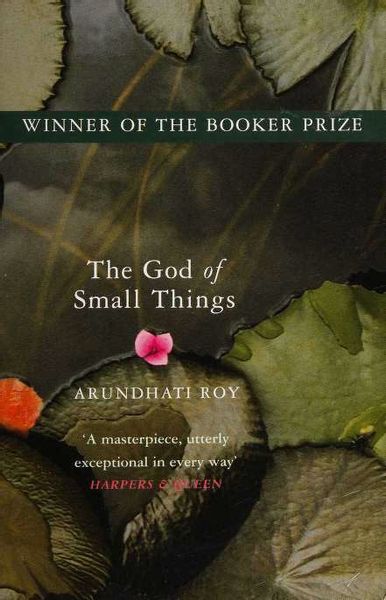
The book follows the twins of Ammu, Little Rahel and Little Esthappen (though they are seldom Ammu’s Rahel and Ammu’s Estha but often Rahel’s Ammu and Estha’s Ammu). It is about Love. It is about Laws. But it is a book about Refusal. As Society frantically sets down Laws, Roy’s protagonists hurriedly Love without Borders and Boundaries. Coveting Quiet Intimacies, they cross the banks of forbidden territories. A world wherein Love and Laws collide. But History always interrupts Loudly, in Misfortunes and Consequences. This novel does not follow a simple plotline. Is it about Communism? Or is it about Caste hierarchies? Is it about the Specters of Colonialism? Or is it about Baby Kochamma? Or is it about “Hatted, bellbottomed and Loved from the Beginning” Sophie-Mol? Or is it indeed about the God of Small Things, Velutha? The book never really pins down to one narrative but rather continuously moves between these plotlines. Everything is messy and complicated. Language is also not spared. It too collides.

This is one book of fiction that really pulls me back again. I have ruminated for days and days (absolutely awe-struck) by Roy’s sea-vast (like Estha’s sea-secret eyes) rhetorical vocabulary. These words and sentences narrate the histories and paces of people, locales, and cultures. It builds such memorable and solid characters. Even a reference to Reader’s Digest Great Encyclopaedic Dictionary sets an unforgettable detail of description upon their anglophilic disposition; a Dior perfume secured in Baby Kochamma’s cupboard, Pappachi’s studio photograph from Vienna, the “absurdly opulent” Plymouth or Rahel and Estha’s collection of books including Old Dog Tom and Janet and John (while I read Kalikkudukka and Balarama and Balabhumi comic books!). Set in Kerala, references to Kathakali and Communism as well remain compact remnants of the locale. But more significantly, Language spools out into repeated sentences, backwardly read sentences, sentences and conversations changed into humorous rhyming poems, referencing stories told from the perspective of the twin children.
Somewhere, I had read about a hypothetical probability of Rahel and Estha floating back and fusing into the character of Anjum/Afthab in The Utmost Ministry of Happiness. And more interestingly, in an interview, Roy mentions about the character of Tilottamma in her second book as the fictional child of Ammu and Velutha, “had their story ended differently”. How remarkable is that? I absolutely adore such memory whiffs, this referencing back and forth between novels. It lets us move past one novel and imagine a whole other world of characters. For now, I am really looking forward to reading her memoir, Mother Mary Comes to Me.
About the Reviewer

Thamanna is a researcher and a writer based in Kerala. Her love for the perfectly placed commas and words in a sentence drives her editorial impulse and appreciation for the language. She also enjoys reading stimulating conversations on books, cinema and art.


 The Hemlock Journal
Leave a comment