Every time I hear news about leopards, bears, and elephants “encroaching” into apartments, gated communities, and other urban human settlements, I am drawn to a couple of childhood memories. I was ten years old when I had my first true encounter of the wild, in Sengalipalayam, a locality not far away from the bustling city of Coimbatore. My mother was picking flowers from the home garden when a snake brushed her hand. I caught but a glimpse of its tail as it escaped in panic. The second encounter was in the same home when our drumstick tree was blanketed with a hairy caterpillar infestation. The trunk of the tree looked like it was wrapped in a cosy blanket.
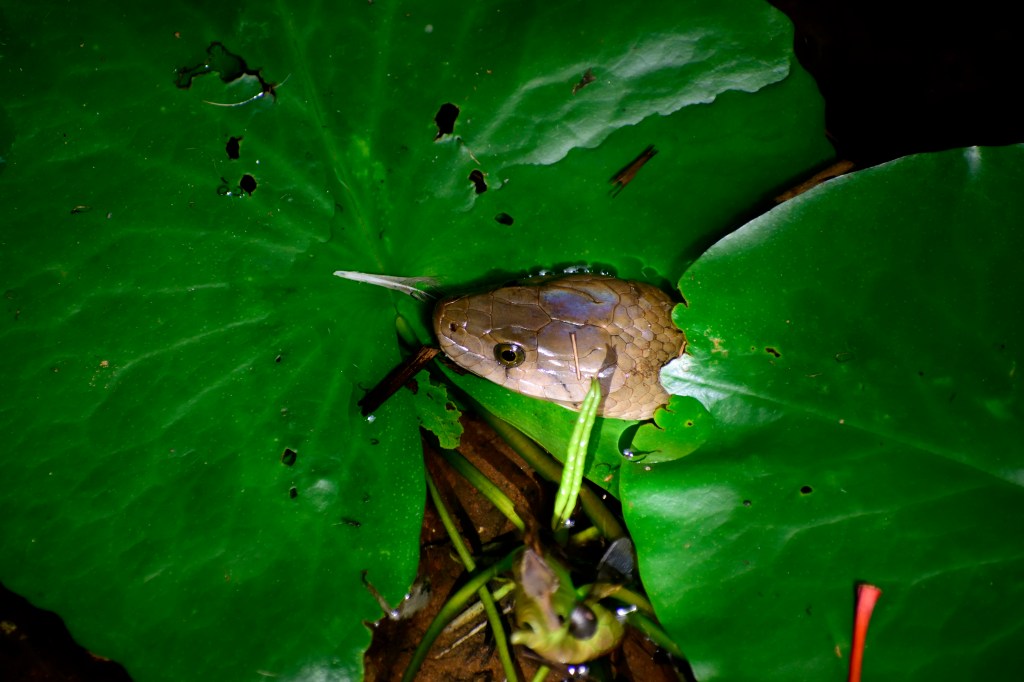
In both cases, the human reactions were barbaric. We tried to hunt down the snake for its crime of brushing against a human. Luckily, that hunt ended in vain. The caterpillars had no such luck. The tree, their loving host, shared their deathly fate as we scorched down the entire trunk.
Then, I felt nothing beyond that unattached curiosity of a child. But now, I wonder what harm was caused by these animals to evoke such a savage reaction? The snake, most likely a harmless rat snake, was just keen to escape a large and threatening-looking human. The caterpillars had congregated to commence their journey into moth-hood. Neither of them had any intention to harm the humans. Even their potential for harm was low.
Snakes, like most predators, prefer flight more than fight. A fight is a costly affair for a predator that can result in injuries, leading to an inability to hunt for extended periods. A goat might try to attack a human more than a snake because the goat assumes the human is a predator and is driven to protect its life. The caterpillar is even less harmful. In the worst case, a human endures an annoying rash that lasts a day or two if they come into contact with the caterpillar and not because the caterpillar attacked them. With the smallest vigilance, such contact can be easily avoided.
And yet, in both cases, we chose an outsized assault. We do not react in this reckless manner with other potential threats. A car has a higher chance of running over a pedestrian than a snake biting a human, yet nobody hunts down and destroys cars. This irrational fear arises from the perception that the snake and the caterpillar are not a part of our ecosystem the way the greenery and the birds in our gardens are and therefore have no utility for us. How much farther from the truth can we be! Without the snake, which is more common in urban settings than we realise, our cities would be overrun with rodents. Without the caterpillar, there would be no moths to feed the songbirds and to pollinate the fragrant night flowers. Even the slimy slugs that we consider revolting are food for the magical fireflies.
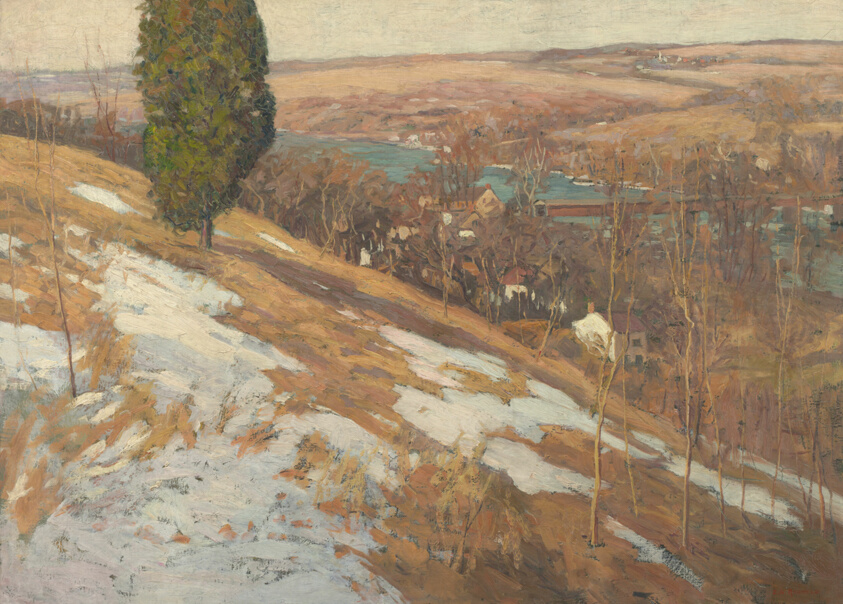
In our ignorance, we have created boundaries between the wild and the “civilized” world. I wonder what it would take to instead blur these boundaries with curiosity, the childlike curiosity, the intense observation of the Sangam poets of ancient Tamiḻakam . Then, the flora and fauna of the “wild” become a part of our life. We can then think of crocodiles devouring young fish to describe how a man’s infidelity affects a woman (Aiṅkuṟunūṟu 5), and the flowers of the Vēṅkai tree (Pterocarpus marsupium) looking startlingly like tiger cubs to discourage a lover from visiting his lover at night (Kuṟuntokai 47). Even something as trivial as water flowing through terracotta pipes can remind us of an elephant’s trunk carrying water in it (Paripāṭal 105).
If we learn to identify a snake, a scorpion, a caterpillar, a slug; if we study its life for the briefest of an hour, we’ll discover the immense complexity and beauty in it. In that light of curiosity and wonder, we blur not just the line between the wild and the “civilized” but the line between us and the world. The wild becomes the heart of our home, the world becomes a pulsing life in our palm. How can we hurt the heart of our home, the pulsing life of our palm?
Gerald Durrell remarks, “…by asking the question “what use is the animal (sic)?” you are asking the animal to justify its existence without having justified your own.” Unlike us, the wild in the heart of our cities doesn’t threaten us if we do not justify our existence to it. It simply hides moments of wonder in the hope that us, her children would discover them.
About the Author:

Agnibarathi is a writer, poet, and software engineering executive whose work frequently explores the intersections of nature, mythology, and social philosophy. His writing has appeared in publications such as The Madras Courier, Ethos Literary Journal, Muse India, and The Chakkar. He was recognized in The Hindu Lit for Life 2025 for his short story “How the Spider Found Her Home,” and his debut poetry collection, Hymns for Loving and Longing, is forthcoming from Red River Press in 2026. Deeply influenced by Classical Tamiḻ literature and an ethos of ethical veganism, Agnibarathi seeks to subvert traditional narratives to examine modern privilege and our relationship with the natural world.
SUBMISSION OPEN for Fiction Writing Contest. Win Cash Prizes and Dual Publication with The Hemlock Journal and Remington Review. Click Here to Know More.


 The Hemlock Journal
Leave a comment