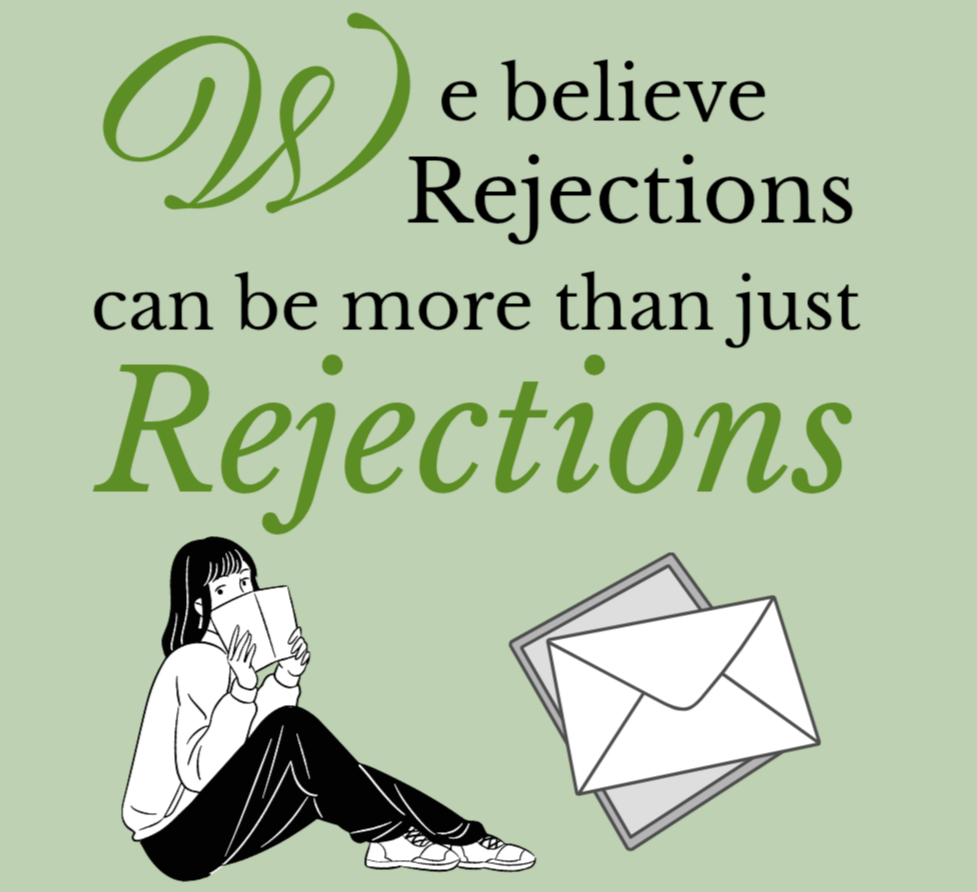
When we reject a work of fiction, poetry or creative non fiction, submitted to us, The Hemlock Journal breaks our hearts twice.
One of the hardest things for us, as a reader or an editor, is rejecting a piece that clearly has something good in it. Every now and then, we read a work with great potential, yet in its current state, it feels unfinished, not fully realised its potential. And this is where our hearts break, for the first time.
What if the author had pushed a little further here to develop the characters and build a great plot?
What if the poet had begun the poem with that striking line buried in the middle?
What if the metaphors were stronger, more closely woven into the themes.
What if… what if… what if…
For everyone’s kind understanding, we are only able to accept 10–12% of total submissions. We receive a large number of entries, and with limited space in both our digital and print issues, we simply cannot accept more than this — even when we genuinely wish we could. That is when our hearts break for the second time.
Our team of readers and editors does more than read and send out acceptance or rejection letters. We can help authors see their work through an editor’s lens — so that each piece may realise its true potential.
How?
The Hemlock Journal’s Editorial Commentary goes far beyond explaining why a piece was accepted or rejected.
When authors select this option while submitting, we do offer thoughtful, constructive feedback, from strengthening the narrative arc and deepening character development, to refining language so that it evokes the right emotion in the right place. We suggest where a piece may be tightened, where words may be cut for sharper impact, and where suspense and anticipation may be heightened.
Because sometimes, rejection is not an end. It is the beginning…




 The Hemlock Journal
Leave a comment