The Partition of 1947 ruptured the Indian nation not merely in the political sense of the term; it also enforced social, emotional, and psychological divides, leaving identities and histories irrevocably fractured. New maps were drawn only to have even newer lines etched onto them each day. This sundering of India had bigger, more acute implications. Millions of people were uprooted on either side of the border; thousands were evicted from their neighbourhoods and several others fled the homes they once belonged to. That a simple act of cartography could have sparked such seismic consequences was unimaginable. Amidst such exchanges occurred communal bloodshed, sexual brutalities, and what scholar Urvashi Butalia calls “one of the great human convulsions of history.”
In her seminal text, The Other Side of Silence, Butalia examines the deep-seated ramifications of this large-scale geographical, political, and psychological displacement. She unearths voices and personal accounts long suppressed by conventional (and often, sanitized) historiography, rescuing lived experiences from official amnesia. She notes that the Partition is “not a closed chapter in history”; rather, its consequences continue to haunt the present, enforcing, repeating, and reenacting those very divides. In the section titled ‘Honour,’ Butalia records the harrowing process of “recovery of abducted women.”
Women were the worst sufferers of the Partition. They were abducted, raped, brutalised, and sometimes forcibly married and converted to the religion of their abductors. Whilst Indian officials were confronted with the mammoth task of tracking down these hostages, a secondary problem arose—that of women who resisted recovery. In The New Wounded: From Neurosis to Brain Damage, Catherine Malabou characterises the brain as an electrical machine that can “confront its own energetic excess through dysfunction.” Observing further, Malabou argues that ‘Cerebral Auto-affection’ or the capacity of the human brain to know itself, becomes the stepping stone towards the creation of the self. This self-reflexive activity is carried out through the process of emotions. Thus, Malabou steers away from the Freudian conception of the human mind as the reservoir of drives, positing instead that the self is constituted only through emotional negotiation within the brain.
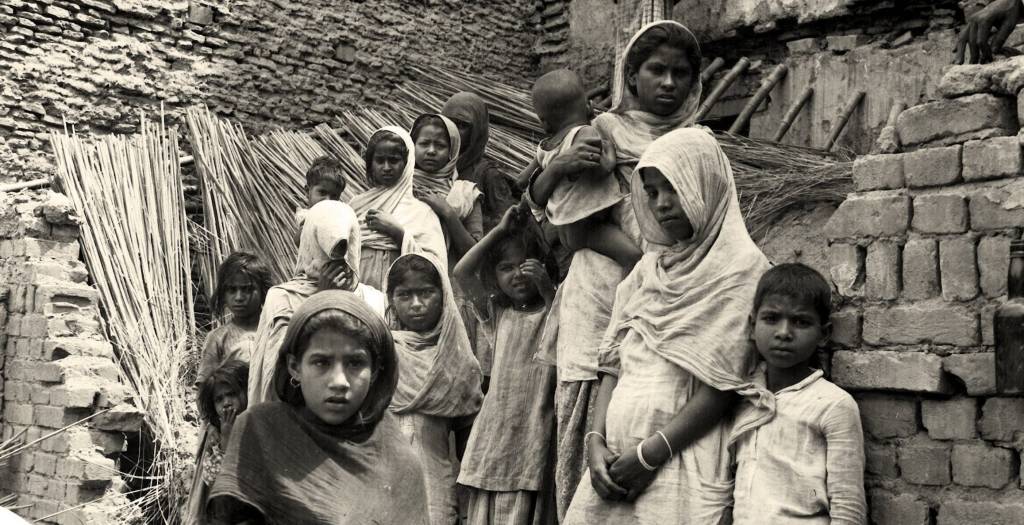
Therefore, the refusal of abducted women to cooperate with the state-led efforts for recovery is not merely an act of rebellion; it also becomes an act of self-preservation and the internal affirmation of a newly reconstructed identity, born out of emotional reconfiguration. The Partition presented to these women altered circumstances, severing them from their erstwhile husbands, homes, and families. With their core, proto-selves mutilated, their brains negotiated emotional equilibrium by rewiring and adapting to the changed situations, and, to be “recovered” by the state only meant jeopardising this hard-won selfhood. Thus, more often than not, women claimed that their relationships with their abductors were voluntary and consensual. It is here that we observe the neuro-plasticity of the brain, or its ability to rewire itself after a harrowing, traumatic, and life-altering experience. Butalia notes that women who made the choice to stay back often had children by their abductors, thus reaffirming their new identity.
Thinkers have contemplated the lopsided nature of said recovery, arguing if women, freshly relocated to shelter-camps or asylums, were truly allowed to exercise their free will. Political leaders believed that abducted women lacked the sensibilities to make sound decisions.
“The idea is that in the environment that she is in at that moment, she is not a free agent, she has not got the liberty of mind to say whether she wants to leave that environment and go back to her original environment or whether she should stay here.” (Butalia, 2000, 144)
Such assumptions become problematic. If selfhood is attained through emotional processes, then the emotional negotiations undergone by these women were crucial to their new identities. Therefore, by suggesting that the women had “no liberty of mind,” the state effectively dismissed their lived experiences and invalidated their auto-affective processes of becoming. Their condition also highlights what Malabou defined as the ‘receptive potential’ of plasticity—the capacity of the self to be shaped and reformed by external circumstances. This reformation of identity is caused by the explosive rupture of the trauma caused by repeated displacements. Malabou observes that the traumatic subject is both deformed and reformed, i.e., the psychic disruption leads to the creation of a new identity, which itself predicates on the destruction of form.
The status of women during the Partition was closely related to sacramental conceptions of ‘honour’ or izzat. Although state-enforced geopolitical divides caused abject misery, there was deeper shame in losing the woman to abduction, rape, or worse, conversion into another religion. This ‘moral’ restoration of women was hinged on the necessity to prevent the metaphorical castration of the men in the country. However, this paternalistic logic refused to consider the agency of women involved. Malabou suggests that the self as a dialogic mechanism is not a pre-existing entity; it is actively formed through emotional reorganisation. Therefore, these new relationships forged by women, however precarious or coerced, were essential to their new subjectivity and to remove them from “those other, non-acceptable families” in the name of national honour was not a form of liberation but rather a systemic erasure of their selfhood.
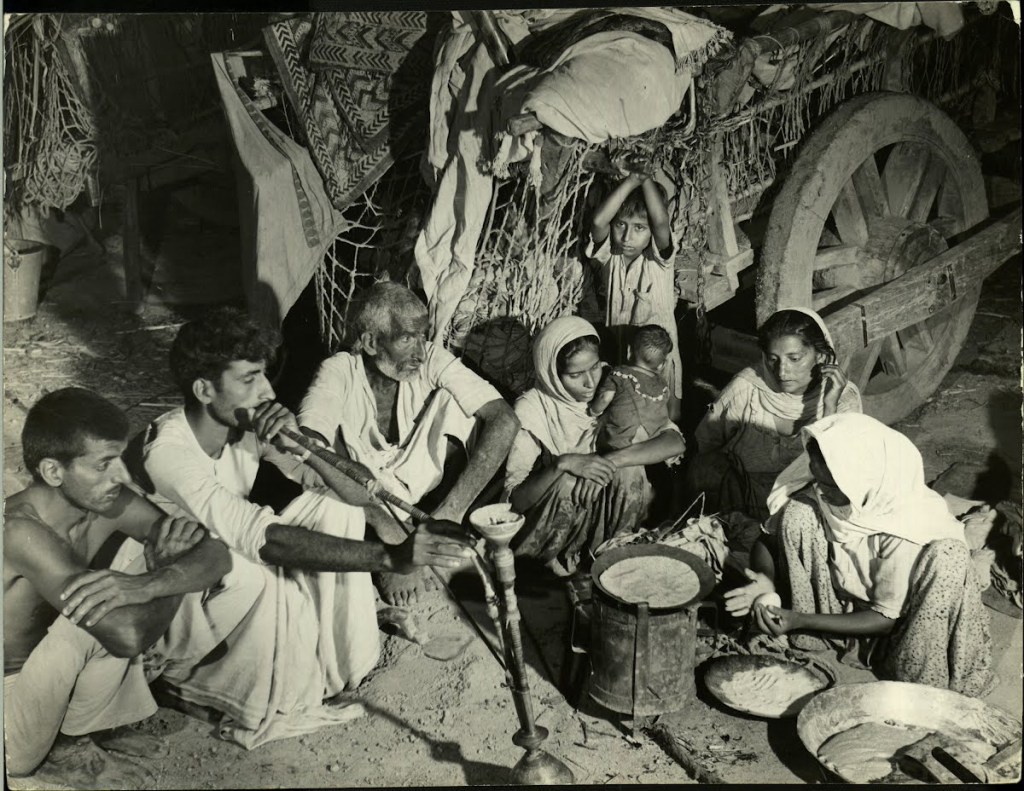
Butalia notes that the violence faced by women during the Partition continues to be enveloped in stark silence. With the exception of Basant Kaur, all of the accounts presented in the section are narrated by men who conflate the ‘sacrifice’ undergone by their women with martyrdom.
“Unlike in the case of abducted women, here families did not report the deaths of their women, for they themselves were responsible for them. But while abducted women then entered the realm of silence, women who were killed by families or who took their own lives entered the realm of martyrdom.” (Butalia, 165)
The remembrance rituals conducted in gurudwaras serve to mythologise the suffering of these women, memorialising their bodies as sites of communal honour. It is what Cathy Caruth
calls ‘the crying wound,’ which bleeds meaning into the present. In repeating and reenacting the trauma borne out of the “unconscious act of the infliction of the injury,” not only are women encumbered with prescriptive moral codes or ways of behaving during crises, but the community itself is also trapped in a violent memorial loop that offers no scope for emotional recovery from debilitating incidents of the past.
A survivor, Basant Kaur recounts to her children the deaths in her family and neighbourhood with much precision— “I keep telling them these stories…they are stories after all… and you tell them and tell them until you lose consciousness…” (Butalia, 159) Malabou directs attention towards the ‘cerebral unconscious’—that liminal zone of the mind where meta-cognition takes place. The memory of those horrors lives on in one’s unconscious, not repressed but unresolved and unprocessed. Kaur’s speech reflects the ‘sui generis’ nature of the unconscious, which generates its own logic of trauma. Thus, her storytelling becomes a means of achieving emotional and psychic homeostasis. Malabou’s conception of Plasticity or “a form’s ability to be deformed without dissolving,” becomes abundantly clear in this respect. Kaur’s experiences have left her violently altered and yet, she retains a certain coherence. She is re-ontologised without a complete erasure or disavowal of the self.
It becomes evident that the trauma of Partition fractured what Freud calls the imperishable, core ‘Proto-Self’ of individuals. Instead, new identities are formed, which continue to bear the lacerating wounds of the past, crying to be soothed.
A literary criticism by Anikait Chakraborty
About the Author
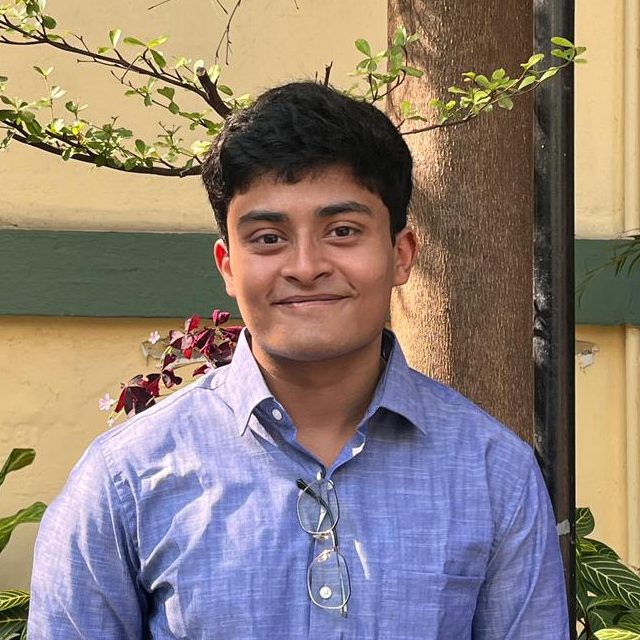
Anikait Chakraborty is an award-winning student filmmaker pursuing his degree in English Literature at St. Xavier’s College, Kolkata. An aspiring academic, he is primarily interested in intersections of film, literature, and cultural studies, exploring the ways in which narratives structure our understanding of history and the self.


 The Hemlock Journal
Leave a comment