The Hemlock Journal is accepting submissions for Poetry Writing Contest. Click here to participate.
Christmas was three days away. The boy and his brother had been awake in their beds since dawn. All week, they had noticed their parents exchanging glances and talking in hushed tones behind closed doors. After some deliberation, his brother had agreed with the boy’s conclusion that the parents were surprising them with an Atari this year.
As soon as their parents left for work, they kicked off their sheets and went to their mother’s closet.
‘Do you see anything?’ the boy asked, craning his neck under the ladder.
‘Nope, just some old photos,’ he said, closing the sky-blue suitcase he’d been peering into. There was an odd expression on his face when he stepped down.
The boy blinked back tears before his brother could see and reminded himself that their mother could have hidden the Atari somewhere else – maybe even at the bakery, where they kept the cash in a large safe.
The knock at the front door startled them both. Their father’s friends sometimes showed up late at night, but no one had ever come this early. His brother folded the ladder back into the closet and peered through the blinds of the bedroom window.
‘It’s ok, it’s just Chino,’ he said
Chino was their father’s cousin. His real name was Sebastian, but no one ever called him that. The boy had once asked him why everyone called him that, even though he was not Chinese or even Asian.
‘I don’t know,’ he’d shrugged. For the same reason they call you Einstein, I guess.’
Chino helped himself to a beer from the fridge and drank it standing by the kitchen counter.
‘Go get your camping gear, boys. I’m taking you out to the Everglades for the weekend.’
The boy looked at his brother.
‘What about school? The teacher is bringing us hot chocolate and marshmallows today.’
‘Hot chocolate? It’s eighty degrees outside.’ He made a face, as if the boy had said something silly. ‘Anyway, forget all that. I have a bunch of snacks in the car. Got stuff to make s’mores too.’
The boy grabbed the two backpacks, with the troop #16 patch, from under the bed. His brother called gunshot first, so he jumped into the backseat of Chino’s puke colored Oldsmobile. They drove down Coral Way, where the tree canopy covered the street until it opened into the suburbs before finally dead-ending on a trailhead. He parked near the entrance to the slough. Chino’s airboat swayed on the water. They unloaded supplies from the trunk, including a cardboard box with holes on the lid.
‘What’s in there?’ his brother asked.
Chino pulled the lid to reveal a chicken, wide-eyed and shaking.
‘I thought we could let it loose and hunt it for dinner later. I’ve got bb guns in the boat.’
The boy looked away from the chicken’s eyes. They reminded him of a neighborhood cat he had been feeding until one of the old neighbors ran it over.
As the boat cut through the sawgrass, his brother took pictures with a Polaroid camera – his most prized possession. Chino slowed the engine, pointing to a log floating on the water. As they got close, they saw it was not a log, but an alligator, its flared nostrils peeking through the swamp’s surface like a pair of black eyes.
Soon, they found a large enough island where he and his brother set up the tents while Chino paced, smoking Marlboros held between trembling fingers and checking his watch. When they were finished, he inspected the campsite and seemed pleased enough with their job. He handed each a Hershey bar.
The boys were eating peanut butter sandwiches when Chino went looking for something in the airboat, cursing as he rummaged through the storage box. He returned, empty-handed.
‘Boys, I forgot to bring the lighter fuel. I’m going to go back and check the car. If it’s not there, I’ll have to go buy some.’
When the sun turned orange against a bruised sky, the boy wondered what was taking his uncle so long. He kept the thought to himself. From the way his brother searched the water’s horizon, he seemed to be wondering the same thing. Without being told, the boy went to search the perimeter of the camp, gathering dry branches and stacking them pyramid style, the way he’d learned from his troop leader that summer. When he reached for the matches, his eye caught on something at the bottom of the bin. He pulled out the can of lighter fluid.
‘Look! Chino did bring it. He left for nothing.’
His brother grabbed the can from him and held it with that same expression he’d worn in their mother’s room that morning.
By the time they got the fire going, blackness had fallen around them. They pulled on sweatshirts to protect their arms from the Everglades mosquitoes, fat with the blood of their new victims. Their bare legs continued taking fire.
‘What’s taking him so long?’ he finally asked his brother.
‘I don’t know,’ he said, scanning the flashlight over the water. ‘Maybe his car broke down again.’
‘You think he’s waiting for Mom and Dad to finish work so they can come too?’
‘What I think is that I’m starving. Let’s heat up the hot dogs and beans.’
After dinner, while he wiped the pots, the boy imagined the other kids in his apartment complex playing kickball or soccer. On Friday nights, the older kids would jump the wall behind the parking lot to the cemetery to smoke pot, or walk a few blocks to the upscale Coral Gables neighborhood, returning with a shiny bike or two. But not his brother, who’d been forbidden by their mother to hang out with the delinquents, as she called some of the boys who lived in the complex.
‘We should get inside the tent,’ his brother said. ‘Chino will be mad if he gets back and finds us awake.’
The boy had finished his prayers but still found it difficult to wind down. At home, he often fell asleep to the voices of neighbors, old Cuban exiles talking politics over a game of dominoes in the courtyard outside his bedroom. Out here in the Everglades, there was nothing but eerie silence. When the scuttling sound outside pierced the stillness, he sat up and shook his brother awake.
‘Something’s out there.’
His brother cocked his head to the side, listening.
‘It’s the chicken, stupid. Let me sleep,’ he said, turning on his side.
The next morning, he found his brother counting the water bottles, a crease on his forehead. He wanted to ask about Chino again but instead, went to the cooler and grabbed a bottle. He gave the chicken some of his water, ignoring the look his brother shot him.
‘Are you sure it was only photos in that box?’
His brother sucked his teeth.
‘Man, why are you so obsessed with that stupid Atari? You know it costs more than our rent.’
Of all the things his brother taught him to do, feeling guilty would be the one to stick.
‘I’m not obsessed! I invited some kids from class to come over and play. I don’t wanna look like a liar, that’s all.’
‘You really think those kids are gonna come to our house? Their parents don’t want them hanging out with a Marielito.’
The boy pictured the girl who sat next to him in class, with her blue eyes and freckled nose.
‘But we’re not even Cuban! We came here on an airplane.’
His brother shook his head.
‘Doesn’t matter. In Miami, we’re all Cubans.’
The boy kept to himself after that, playing with his new mascot. The chicken had warmed up to him, eating the soup crackers out of his palm.
For lunch, they made s’mores, half joking about what their mother would do if she’d caught them having dessert before dinner. The thought of her made the boy homesick and a little worried about the trouble they would be in for skipping school, even though it was Chino’s idea.
He was wiping himself behind a bush when he heard the commotion. At the camp, he found his brother chasing the chicken, who was half running, half flying around the campsite. He tried not to laugh at the sight.
‘What happened?’
‘This little shit ate the rest of our crackers.’
He was red-faced, seething.
The boy grabbed the chicken, holding it close to his chest.
‘It’s not that big of a deal. He was just hungry.’
His brother latched down the cooler lid.
‘We can’t afford to waste food.’
He pointed a finger at the chicken. ‘Don’t get too attached. We may need him for dinner if Chino doesn’t get back soon.’
The boy did not bother to hide his tears this time. He placed the chicken back in the box and carried it inside the tent. When it was dark and his brother called out that dinner was ready, he pretended to be asleep. In the morning, his brother handed him a bowl of cold beans with pieces of hot dog, which he ate greedily despite himself.
‘Hey, I was just kidding about the chicken.’
The boy eased his grip on the chicken, who had been sitting on his lap.
‘Do you think they’ll come get us today?’ the boy asked.
The brother regarded him before answering.
‘I think something may have happened. It’s Saturday and we’re supposed to be helping at the bakery today. Someone should have come for us by now. I was thinking last night that maybe we can build a barge to get back to the trailhead.’
The boy felt something heavy landing on his stomach. He looked toward the brackish water, thinking of the gator. On the airboat, they’d reached the island quickly, but now the swamp seemed to stretch for miles.
‘How are we going to do that?’ he asked.
‘There’s a good amount of rope in the supply box. If we can find some sturdy pieces of wood, we can tie them together. I made something similar in shop class for the Homecoming parade last year. It wasn’t that hard. We just have to find enough wood to fit both of us.’
And the chicken.
They spent the rest of the day collecting enough to make a five-by-five barge. They were both skinny, but it would still be a tight fit. By the time they started roping the planks together, they were down to the last two water bottles.
That night, they slept on top of their sleeping bags, too exhausted to move. In the middle of the night, they woke up to the sound of a distant growl that reverberated throughout the island. He looked at his brother, whose eyes had doubled in size. Though rarely seen, panthers were known to roam the Everglades.
His brother got to his feet.
‘We can’t wait around anymore,’ he said. ‘I’d rather take my chances in the swamp than stick around here waiting for whatever’s out there to find us.”
The boy placed the chicken inside his jacket, patting his shivering head. They stuffed whatever fit into their backpacks and dragged the barge to the edge of the water, leaving their tents behind. The boy hoped their father would bring them back to collect the rest of the camping gear.
They dipped their walking sticks into the black water, wading through the marsh in the dark toward what they hoped was the trailhead. The boy turned at the slightest sound, imagining the gators stalking them from the surrounding mangroves. His heart thumped as loud as the chicken’s until at last, daylight broke.
The sun, pale as a lemon wedge at dawn, was now blinding them. The adrenaline that had kept them moving through the night gave way to exhaustion and thirst. His brother motioned him to stop and they kneeled, panting. The boy thought how wonderful it would be to float in the water for a bit. His arms felt like lead. His vision blurred and it took him a moment to realize the water’s surface was actually shaking. They had to brace down to keep from falling over. His brother hooded his eyes and squinted in the direction of the sound. Before they saw the approaching airboat, they heard their names coming from the loudspeaker.
The boy, now a man with his own sons, sits in the car, on the curbside of his childhood home. The apartment buildings are still painted the same coral pink shade, the same color as the blooming crepe myrtles of Woodlawn Cemetery, visible in the spaces between the three buildings. He wonders if his brother had ever come back here. Another question unanswered.
They never spoke of that camping trip. After their rescue, they were taken to the police station, where an officer gave them lukewarm coffee and crackers but no information about Chino or his parents. It wasn’t until Chino’s wife arrived – eyes red and swollen – that they learned about the accident.
Much later, after they’d been living with their aunt for a long time, he’d learned the ‘accident’ was his parents and uncle being shot in their apartment over a suitcase filled with cocaine stuffed into flour sacks. The boys’ impromptu camping trip had been planned for weeks.
His wife reaches for his hand, the shoebox that his brother’s widow handed him after the burial sits unopened between them. Her touch brings him back to the present. From the backseat, the oldest son asks again if they can open the box.
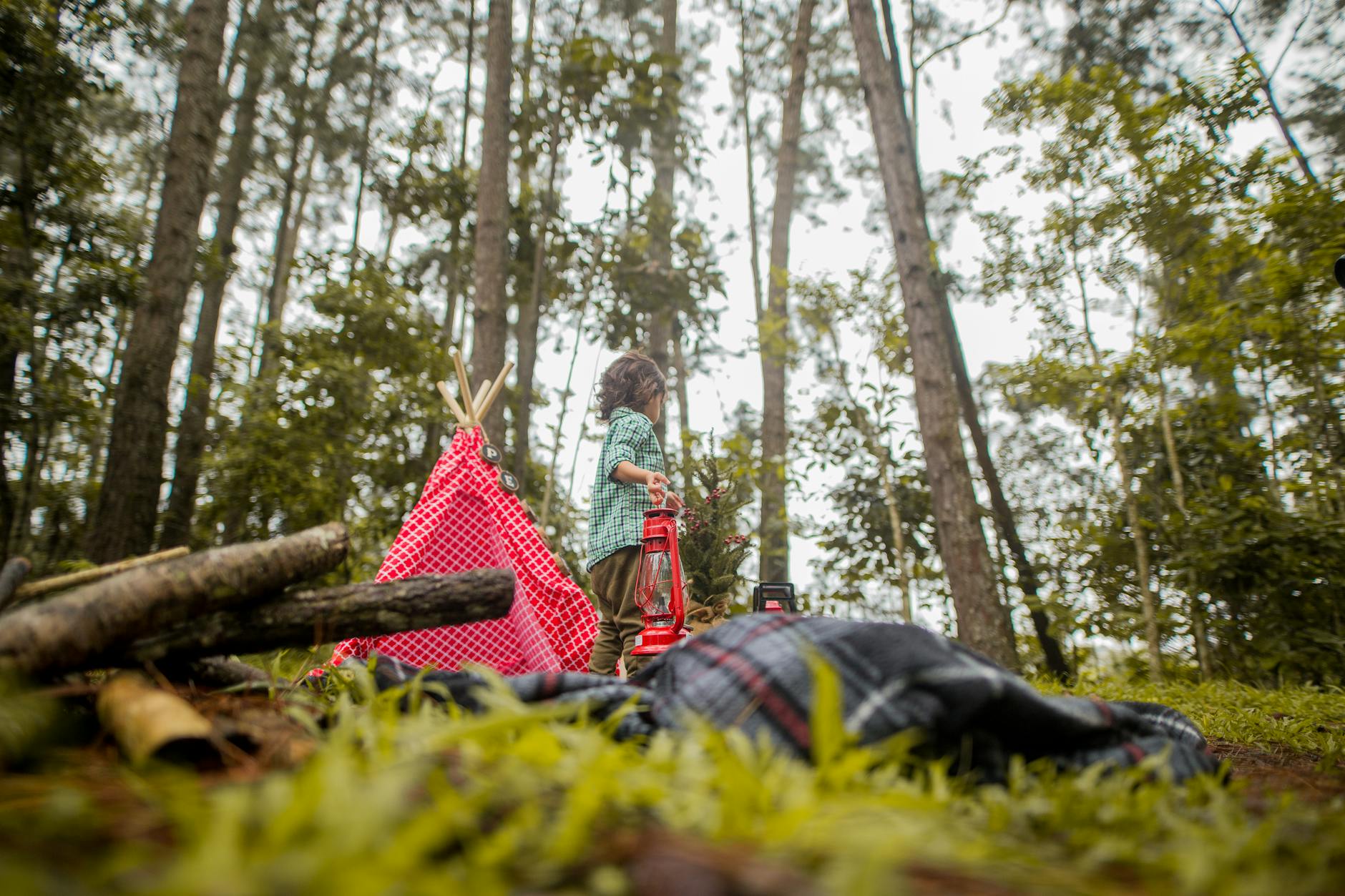
The lid has the words Chicken Island, written in his brother’s edged cursive. Inside, he finds the old Polaroid camera, cream colored with a faded rainbow sticker. Next to it, a handful of pictures: the alligator floating on the water, the campfire. He holds the last one up to the light. The boy in the picture stands with his back to the camera, a scrawny chicken pecking at his feet.
About the Author:
Karin Rumie is an emerging writer from Miami, Florida. Her work has been featured in Flash Fiction Online and CommuterLit magazines as well as on her website, Mustlovechocolate.org




 The Hemlock Journal
Leave a comment