Fernando Pessoa’s magnum opus, The Book of Disquiet (Livro do Desassossego), is, in its amorphous form, a diary, a novel, and an artefact of fragmentation. The poet himself called it a “factless autobiography”; documenting the failure of the mind trying to cope with the burden of modern alienation. It is not an expression but a defence, an inward retreat.
He speaks of its structure – or its lack thereof, saying, “I begin because I don’t have the strength to think; I finish because I don’t have the courage to quit. This book is my cowardice.”

Bernardo Soares, the Semi-Heteronym
At the center of this retreat stands Bernardo Soares, the central voice of the book. He is also one of Pesso’s famous heteronyms, who narrates much of the text. He stands apart from the major heteronyms (Alberto Caeiro, Ricardo Reis, and Álvaro de Campos) as Pessoa later referred to him as a “semi-heteronym”, and a “mere mutilation” of his own personality, describing him as “me without my rationalism and emotions.” Soares’s stripped-down consciousness is key to the book’s voice itself. His consciousness is an attempt at pure perception, raw and unfiltered by the human need to impose logical or emotional sense onto things. This detachment is what makes the book feel intensely present, a direct transmission from an inner vacuum.
Soares is a picture of the mundane. He works as an assistant bookkeeper in an office in Lisbon. His inner world is in a constant clash with the banal routine of his office life. He is devoted to his desk and ledgers, and almost sees it as a “bulwark against life.” He prefers the concrete, measurable burden of his boring job rather than the abstract, emotional, and uncontrollable burdens of human ambition and desire. This is the ultimate retreat – picking the small cage rather than the potentially crushing weight of freedom and failure.
Pessoa left behind a sheer volume of incredibly varied prose, including different styles, fleeting thoughts and fragments. He invented Soares, whom he described as a prose writer who poetises, to be the unifying lens to give a single viewpoint to the book. Therefore, inventing a semi-heteronym was Pessoa’s artistic and logistical solution to wrangling all that chaotic genius.
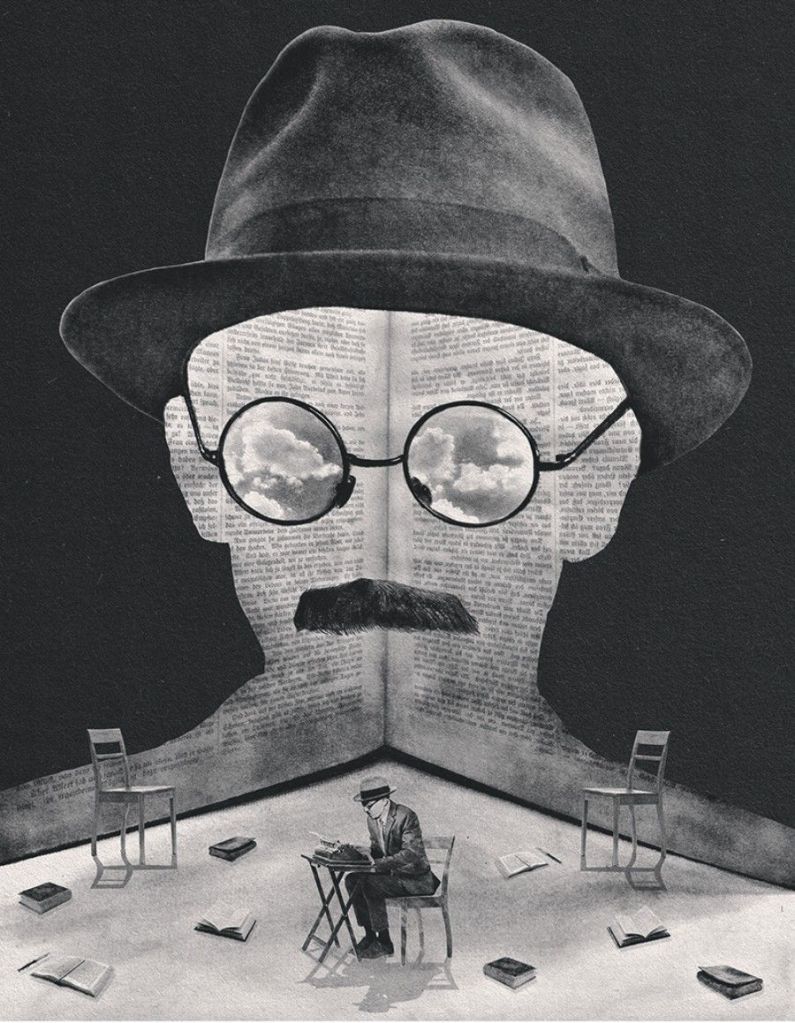
The Inward Retreat
Pessoa writes down his own disintegration, claiming that “from so much self-thinking, I am my thoughts and not I.” This flips the script on the very act of writing; he literally becomes his words on the page – manuscript replacing the man.
The book is an extended meditation on the nature of inaction. Soares believes that dreams are better than action because action always falls short, leading to disappointment. The only way to continue with the burden of reality is by keeping dreams alive, without ever fulfilling them because fulfilment never measures up to what one imagines. The dream stays perfect precisely because it is never tested against the real world. By refusing to act, and by just dreaming, he keeps the real world intact. He dismisses his entire outward life, and is concerned only with the vacuum of his inner life.
“Art frees us, illusorily, from the squalor of being.”
Art becomes the ultimate survival tool because it can hold the illusion without shattering. He sees art as a way to be free, and not as a mirror of reality precisely because it admits it is not real. Even though writing to him is tortuous, he indulges in this escapism since it stems from a deeply rooted sense of utility. He writes because he has to, almost as if serving a sentence. This struggle can be why he takes such a radical approach to style. His approach boils down to two radical principles: first, to express the feeling exactly as it is felt; and second, that grammar is an instrument and not a law. He thus subverts literary convention, bending the sentence structure to find an internal freedom.
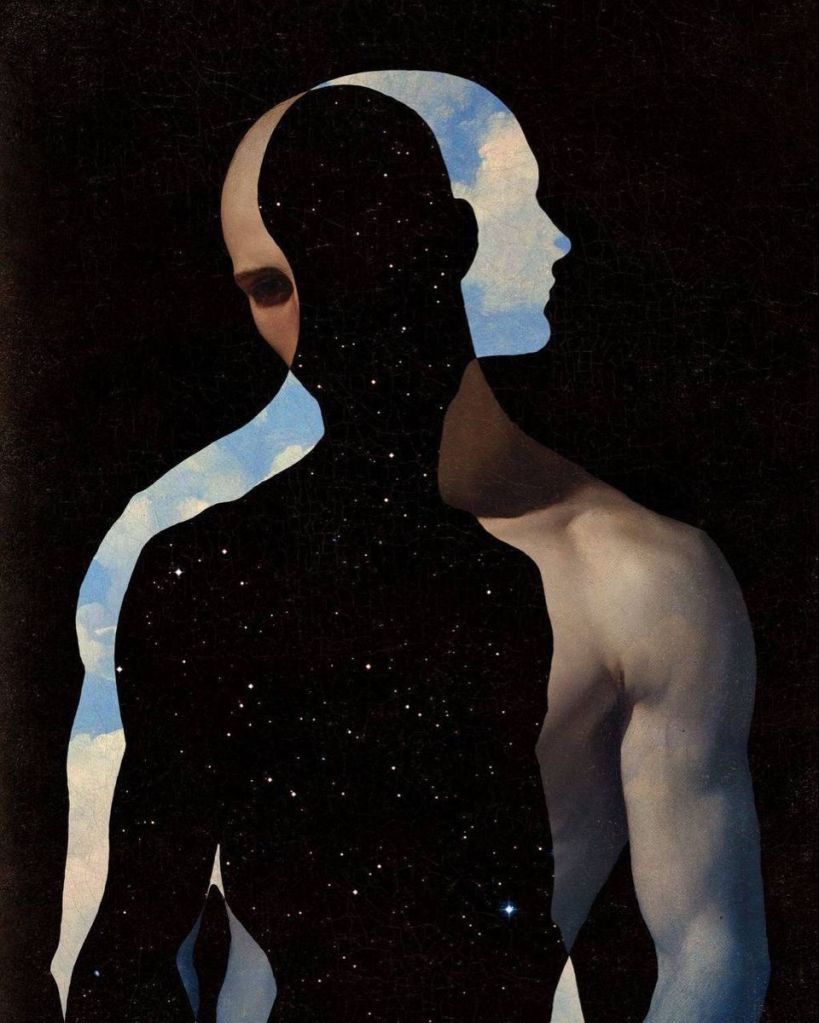
The Fluidity of Self
Pessoa defined freedom as the possibility of isolation. He wanted freedom through isolation. However, this reclusion backfired as he writes that, “having exacerbated my sensibility through isolation, I found that the tiniest things, which even for me had been perfectly innocuous, began to wrack me like catastrophes.” The isolation ended up magnifying the pain of the outside world.
The whole book becomes a profound exploration of how unstable identity is. Soares himself realised, “to live is to be the other.” It’s not even possible to feel today what one felt yesterday. One is constantly shifting, translating into something new, replacing yesterday’s self with today’s. The notion of a fixed personality dissolves itself.
The book is a masterwork of modern alienation and speaks directly to the reader of the digital age, where the self is perpetually fragmented and documented across countless screens.
About the Reviewer

Kanishka Zico is a writer and artist. She majored in English literature from LSR and JNU, India. She studied Japanese language, culture and film studies in Japan. She has published her political and creative works on various platforms. In her spare time, she enjoys playing video games and live streaming art. Find her creative works on zicokanishka.wordpress.com, Instagram: @crowskins

SUBMISSION OPEN for Fiction Writing Contest. Win Cash Prizes and Dual Publication with The Hemlock Journal and Remington Review. Click Here to Know

 The Hemlock Journal
Leave a comment