The prompt beckons me to lay down my struggles in a candid manner in order to win the scholarship, similar to an overly enthusiastic first date who needles you for uncharacteristic vulnerability, even though there is a high risk of one-sided ghosting. I tell myself how I have never really struggled. Raised in the upper middle class, in a country teeming with poverty, I convince myself that nothing of note has been suffered, barring the usual afflictions that mar a privileged person, such as heartbreak or loneliness. How does one convince the scholarship committee or even oneself that such trials are worth doling out money for, on the sole basis of the impact meted on my psyche?

My friends have always been supporters of embellishments in these cases. They argue, if they lived in the countries that demand these essays, their lives would be subjects of a Dickensian novel. For example, my friend wrote on being the first university graduate in his family (but failed to mention the cultural context wherein he belongs to an extremely prosperous business caste that famously does not formally educate their children, choosing to pass on their trade to their sons instead).
“We can be considered rich here, but globally the South is poor.”
Even a mere visit can be jarring. “I was frozen when he said ‘go back Paki’ to me, it was 10 PM at night and I just scuttled off.”
“I make sure to wear designer when I am abroad, but it only makes me an easier target for mugging.” Wealth is an unreliable insulator in these cases.
The premise is this: in order to achieve an education that your parents cannot afford, there are two things that distinguish you from the competition, either your unparalleled academic brilliance, or your private struggles.
I flit through my memories, almost in a desperate haze to find something appropriate. I have been told it is beneficial for the story to be uplifting in the end. Resilience is an important trait, the essays are not so much about adversity as much as your ability to deal with the predicaments. Universities are in constant search for people who ‘think out of the box’, ‘are leaders of tomorrow’ and ‘innovative thinkers.’
I fell down when I was four years old, and in the absence of proper adult attention, I rubbed mud on my wound. Thankfully, there wasn’t any resulting infection and so this could be an example of my ingenuity. Once, I caught a cold during an ongoing class but found myself bereft of access to a handkerchief or tissue paper. Committed to my academic education (and unable to move due to embarrassment), I tore off a page of my notebook to wipe my nose. I believe this is as resourceful as one gets.
I am famously reticent. My friend recently accused me of being unemotional. This stoic nature is highly sought after in corporate settings, as it allows oneself to forego personal woes and concentrate on what’s really important: financially compensated, productive labour.
Finally, I shrugged off my critical attitude and decided to take the assignment seriously. Below is a list of personal struggles that I came up with:
- Before I was born, my mother gave birth to a full-term stillborn child. There was no psychological therapy after the event, her own mother had had three miscarriages. In Indian society, marriage means procreation, and her inability to complete the single task that was most imperative made her lose interest in all others. Finally, I am told, when the family made peace with the circumstances after nine years and decided to adopt, I was born as if a miracle. I take it as a testament of my will to live and my tenacity to struggle against all odds.
- Even after my birth, my mother’s problems did not vanish, and she suffered from symptoms of what is now widely identified as postpartum depression. Of course, I have no evidence of the fact, but kindly take it as an example of my astute observational skills. In the absence of her enthusiastic presence, my maternal grandmother took on the role of mothering. She has been the only one in my life who has insisted on me drinking milk. She passed away when I was ten, because of hospital negligence (pericardial effusion brought on by negligent IV administration), in an ambulance stuck in traffic. I have noticed an anxiety dawn on my entire family when we hear an ambulance siren on the road, nervously hastening to give it way. I am a model citizen that way and believe in following rules for the benefit of the community (collectivism when beneficial). In order to not put anyone out (there is a sense of rightful individuality in me as well), I took to crying silently in my room. Recently, my mother mentioned casually how I had changed for worse in 4th grade, and she had often heard my sobs at night.
- At the heels of my grandmother’s death, my paternal grandfather became immobile because of spondylitis. He was the tallest in our family and my most favourite time with him was when he took his morning walk in the garden at five AM, while I sat watching. Unlike my maternal grandfather, he was extremely family-oriented. His entire face would light up upon laying eyes on me. He never got angry at me except that one time after contracting his disease, when he couldn’t move his body, and I refused to share the television remote with him. He was reduced to his voice, which was often ignored. His demands were minute and frequent, the longer he was alive, the smaller he got. “Please scratch me,” he would ask. “In thirty minutes,” came the reply. I became resilient and would often ignore bodily urges to test the level of control and endurance I could muster. This finally led to a urinary tract infection, but I still try to not scratch or fidget if I can help it.
- My maternal grandfather already had mouth cancer when my grandmother passed away. He was actually undergoing treatment 1547 kilometres away when the news of her death reached him. For an entire year, he was in and out of surgeries and chemotherapy. The hospital would not let me visit him in the in-patient wards because children weren’t allowed (unless of course they had the privilege of being hospitalised themselves). I took on this challenge by dressing up in oversized clothes, applying makeup and wearing absurdly large oxidised silver jewellery which was in trend among the middle-aged women at the time. This showcases my out-of-the-box thinking and inventiveness.
- During my paternal grandfather’s funeral, a drunk uncle tried to make me sit on his lap. My first cousin got angry and asked me to go upstairs. I shot him a thankful look and ran. The entire scene was lost on my mother, who continued to speak to my uncle as if nothing had happened. Once upstairs, my cousin came in and touched my breasts, and slowly moved his hand downwards. I shoved it away and ran to the washroom. This shows my inner strength. After the fact, I chose to speak about it to every single person I could find. I have been courageous, audacious and a believer in justice and advocacy. If I were to be honest, maybe it was to establish my role as a victim and alienate myself from complicity. If I could be voracious, it meant that I was guiltless. It is an established fact that only truths are outspoken with confidence.
- The same cousin later passed away from liver cirrhosis, because he drank too much. His own weakness was the source of excuses supplied in his defence. I felt internally conflicted, and guilty to feel emancipated. I did not attend the funeral because I have the ability to judge circumstances keenly and accord space to those in need. I am not insistent, and do not make things tedious intentionally. In professional language, I can be a good fit because I am a team player and easy-going.
- The mother of the said first cousin contracted cancer. She was diagnosed at the fourth stage and given six months to live. I had been extremely close to her, until the fact. In my diary entry from the time I wrote:
“She was kind in a way that women who are loved are. She lived a comfortable life. She enjoyed fashion, a lot. I actually wanted to get a saree or jewellery to remember her by. She loved animals. She would slide the expensive stuff to you covertly, like candy, which wasn’t meant for the larger family. Her China collection was stunning. The drawing room in her house had a unique and immaculate aesthetic. I had seen it in action only a handful of times, but I loved visiting it when no one was in. Some sort of dust lay orphan in the air, suspended and eerie. The place the epitome of maximalism without being gauche.”
- What I omit is she would often bring up her son’s name with positive nostalgia but stop mid way if I was around. She never once mentioned the incident to me, or how she felt about it. There was no acknowledgment for what had happened, except the passive guilty silence. I accepted that criminal proceedings were not a realistic solution in ‘family matters,’ and yet it pinched me that the sacrifice was considered a matter of course. I remain a feminist and believe that women are not answerable for men’s actions.
As I enumerate my own struggles to rate and choose their worth, I feel aware of all the other stories that float around me like thought bubbles. Someone saw their friend lose a limb, and debated both the ethics and advantages of including a story in which they were not the direct victim. Friend has a wide-ranging connotation, so in order for the story to make any impact, the extent of the relationship between the applicant and victim would need to be established first, eating into the word count. It would be easier if it were a father or a mother.
Another had depression. Only it was not the gripping, outright kind wherein one had tried to kill oneself and paramedics had to be called. It was the quiet kind, where one went to therapy just enough times to get diagnosed and then never again.
A story for scholarship is not only evidence of strife, but that of triumph and success. It is imperative that the negativity is confined to only the first few paragraphs, until the light of hope blinks in beckoning. Here are my tools, you must lay down for all of humanity to seek and see, that I have honed by myself to claw through my pain. It is a contribution to progress. At the end of the day, the story for a scholarship is that of triumph and success, for it is known that we must reward those who are already successful.
Our existence seeks to reduce risk, get maximum returns on our investments, all while following the unwarranted moral codes of distinct societies. We disregard fruits and vegetables that do not meet our aesthetic requirements, and so as humans, we must come across as neatly packaged too.
Narratives are the sole source of information, in an unpredictable world where standardised tests provide no guarantees of future worth. Even the most astute investor has failed on assuredly safe investments. Humanity and consciousness are both fickle lovers. A publisher laments how he had once given an advance to a promising writer, but alas the writer, who was a slave to his whims, succumbed to a drug overdose. Surely the writer’s family was obligated to return the advance, we do not live in a lawless land, but the publisher’s trouble was the time lost. “I had invested so much energy in finding this talent, now to go through it all over again is painful, time is money, you know.”
I agree, and so, I resolve to write an essay which would enumerate my pain in succinct detail, showcase how it had the capacity to impact me negatively till the point of inactivity and defeat (it is imperative to establish an acceptable level of vulnerability and humanity), but I chose in my resilience to continue being a productive member of this beautiful earth, where I do not let my emotions rule my body and mind. Hence, I have decided to disregard all the above mentioned enumerated pointers as they are too personal in nature, and have decided to write on something more academic, palatable and universally experienced. Contracting dengue during my school finals, but still scoring an A+.
Balance is key. Unfeeling is psychopathic, overemotional is dramatic, I am perfect.
About the Author:
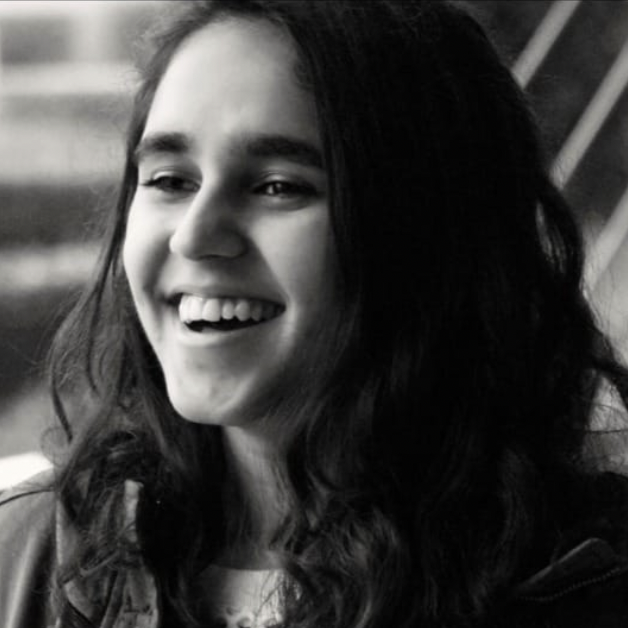
Tanvi Kusum is an aspiring writer and lives in New Delhi. She is also a lawyer. Her work has appeared in The Quint, FairObserver and Visual Verse.
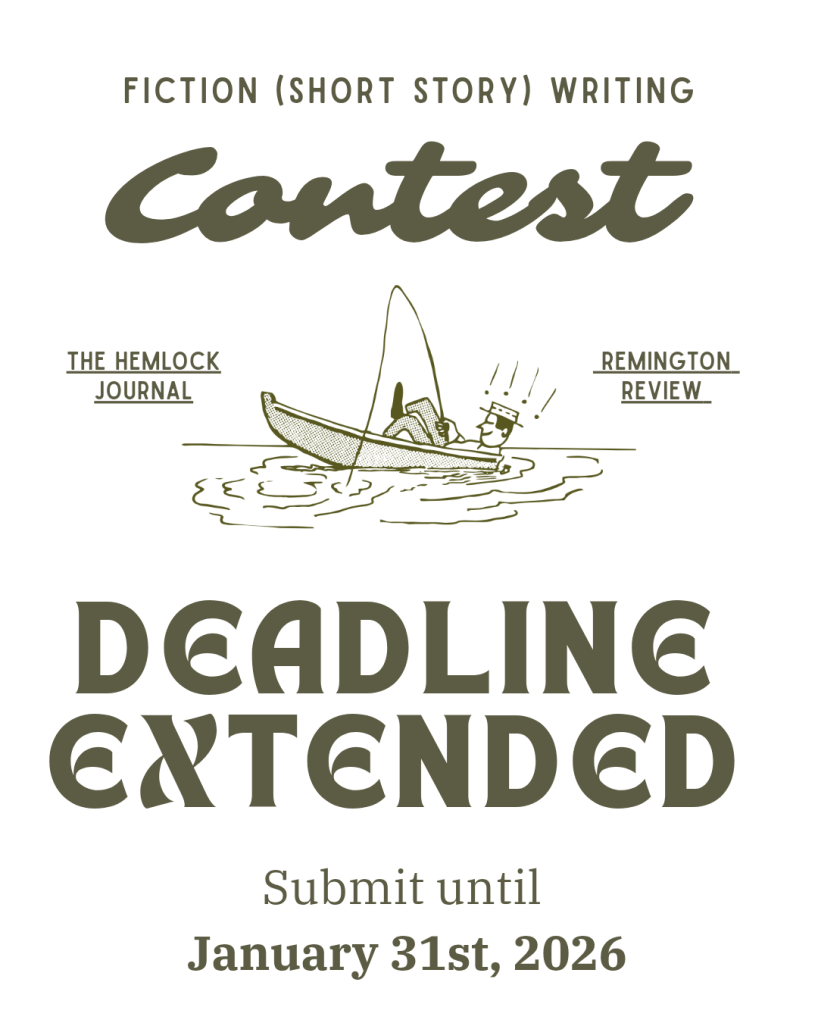
SUBMISSION OPEN for Fiction Writing Contest. Win Cash Prizes and Dual Publication with The Hemlock Journal and Remington Review. Click Here to Know More.


 The Hemlock Journal
Leave a reply to J Cancel reply