In this interview, Abdullah from ‘The Hemlock Journal’ spoke with John, a poet and author, about his work, background, and perspectives on poetry and nature. John shared his journey from a late start in poetry to becoming a published author, expressing pride in his latest collection and specific poems like “A Rural County in Connecticut” and “Kinsugi.” They discussed John’s dedication to his family, his appreciation for nature, and his experiences traveling and drawing inspiration from various landscapes. The conversation also touched on John’s background in the arts and his current work in environmental conservation. The interview concluded with a brief discussion about books John wishes he had written, including Paradise Lost by John Milton and Sonnets by Shakespeare.
Summary
Journal Review and Submission Discussion
John and Abdullah discussed their respective locations, with John being in New England and Abdullah in Mumbai. They talked about John’s recent vacation to the Caribbean and Abdullah’s work-from-home setup. John expressed his appreciation for a review of his book by Archana, a Hemlock Journal reviewer, and mentioned submitting three poems to the Hemlock for their next issue. They discussed the importance of journals offering expedited review processes and the frustration of long response times from some publications.
Poet’s Journey and Literary Insights
John shared his journey as a poet, revealing that he has been writing for decades but only actively pursued publication in the past 10 years. He expressed pride in his three published books and highlighted specific poems, including “A Rural County in Connecticut” and “Kinsugi,” which he considers among his best work. Abdullah, who has a background in literature and journalism, discussed his role in reviewing submissions for a literary journal and expressed enthusiasm for conducting the interview.
Poetry Discussion and Appreciation
John and Abdullah discussed John’s poetry publications, including a poem in Cool Beans Lit Journal, which has a low acceptance rate. Abdullah expressed admiration for two poems from John’s recent book, “How Shall We Return” and “Edinburgh Nocturne,” and John mentioned the rhyme schemes in these poems. John also shared that he constantly refines his work and enjoys subtle rhyme structures.
Nature-Inspired Writing and Gratitude
John discussed his writing process, focusing on nature-inspired poetry and his recent increased productivity. He expressed a belief in finding beauty and miracles in everyday life, contrasting with the busyness of modern culture. John acknowledged the existence of global challenges but emphasized the importance of gratitude and appreciation for natural wonders.
Nature, Family, and Creative Journey
John shared his lifelong appreciation for nature, inspired by his surroundings in Connecticut and travels to places like southern Italy and Greece. He discussed embracing fatherhood and being a grandfather, dedicating his latest poetry collection to his children and grandchildren. John also reflected on his experiences working in the arts while pursuing education, including meeting notable figures in theater. The conversation concluded with John expressing interest in extending the meeting and answering a rapid-fire question about a book he wishes he had written, to which he replied Paradise Lost by John Milton.
Abdullah Lakdawala in Conversation with Mr. John Muro
[Abdullah Lakdawala]: Firstly, for our readers, I want you to give them a brief intro about you, because the world already knows you, they’ve read your stuff. But what is something that is different about you? What is something that the world doesn’t know about you as of now?
[Mr. John Muro]: Um, well, I guess what I would say is that, um… I have been writing my whole life, but I really did not actively pursue publication. And syndication, until, you know, less than 10 years ago, and that was it. The urging of, I did a reading, one of my opponents was accepted for an anthology that I was fortunate enough to do a public reading. And many people came up to me, including the editor of the anthology, and they were shocked that I hadn’t, you know, actively sought publication. In part because, as I think you astutely noted, you did a pretty good job. I think you went to Facebook or whatever, but, you know, I’m over 50, you know that.
So, I mean, I spent my years raising a family, you know, four children, 11 grandchildren. I’ve always loved writing. Poetry has always been a passion, going all the way back to high school. English was my favorite subject. That’s what I majored in in college. But I unfortunately, you know, there’s no regrets, but I’ve actively been involved in publication for only the past ten years or so. Less than that, actually. Now that’s turned out to be really great, hasn’t it?
You know, in my 30s and 40s, I wasn’t actively submitting poetry, I was writing it, but…It’s always good. You know, I’d like to think I’m focused far more on writing and refining, and…Seeking to share my work with the world, so people may not know that.
[Abdullah Lakdawala]: Okay, okay, that’s really nice to hear. Thank you so much for that. I’ll move on to my next question. So, out of all of your work, which is something that you’re really proud of?
[Mr. John Muro]: That’s a good question. I’ve had three books published, and I’ve had several poems. Published since the release of A Bountiful Silence, which, as you know, was published in 2025. And I’d like to think that with each book…The quality of the work is hopefully improved. I’m proud of all three, but I think, like any discipline, the more you do, the better hopefully you become. There’s several poems in each collection, each of the first three books. There’s certain poems that I think really stand out, but among the most recent ones, there’s a poem called A Rural County in Connecticut, which is in a bountiful silence. It’s probably one of my favorite poems. And it just flowed. And I was fortunate that it got published in a very… Nice journal, and I work with my publisher to actually do a video that and I could forward that to you so you can see it. It’s a reading. I personally read the poem with this soundtrack in the background. You know, that would be one poem, you know, I really am proud of. And I have a new poem which is not in the collection because it came out afterwards. Kintsugi, which is a poem based on the Japanese art of repair, ceramics, where, as you may know, they leave the imperfections. They use gold dust to correct the damage. Which is a metaphor for life, right? We all go through life, we all get damaged in some way, we do our best to heal. And that poem was published by Cool Beans Lit, which is a very selected journal. And they’re on hiatus right now, I’m not quite sure why, but in any event, that’s another poem which, you know, not many people have seen, but I’m very proud of it. But of the published poems to date. I would say the one that I’m most fond of is a rural county in Connecticut.
[Abdullah Lakdawala]: How do you keep yourself going and how do you feel in the age that you are? There are so many authors who are younger than you above lots of work, you know what bad is there. So how do you feel? The world is adding? How are you heading into this new world of tech driven? You know, because there’s also AI, which helps writers, you know, to get ideas. So what’s your view on that?
[Mr. John Muro]: I guess what I would say is that I am writing right now, for the past couple of months. I have been as productive as I have ever been. And I think, you know, candidly, I don’t try to stray too far. Far afield of what I feel is my core, and my core is very much poetry inspired by nature, a poetry that tends to be more lyrical, sensual. contemplative. I’m not going to apologize for that. I also know that there’s a swath of the marketplace, as I said earlier, that may be looking for more poems about social justice, social issues. And while I have written some poems about that, my heart and soul keeps coming back to the natural world. And trying to help people, as well as myself, understand the many miracles that are all around us and that happen every day. And, you know, to find beauty in the ordinary, not just the spectacular. And I really do believe that. This is a beautiful world in a lot of ways. Not everybody understands that or appreciates it. And part of what I try to do is, as I’m sure, you know, by having read my books, is to extract a degree of understanding about what I’m seeing. And what is the real message here. But too often… Especially in Western culture, I’m sure India is the same. You’re so busy that you don’t take the time to stop. Reflect and in a spirit of gratitude, appreciate all that we’ve been, we’ve been provided. And I also know I’m not being naive. There’s plenty of challenges in the world today, that goes without saying, but it doesn’t under undermine the um, the fact that we’re all here for a very brief amount of time. And shame on us if we don’t stop and recognize and extend our gratitude to those things in life that help us become better people, inspire us, make us feel whole. That could be a sunset, it could be a bird singing a song early in the morning. The way light falls through leaves, you know, when I take a walk through the woods. There’s so many things, and that gets back to your earlier question, too, about I’m constantly inspired. I cannot explain it. It’s like, you know, a faucet’s been turned on. And over the last month or two, I’ve been, you know, all to poems each week. Like I said, they’re never finished. I’m always refining and so forth. And the majority of them are nature-inspired. No question about that.
[Abdullah Lakdawala]: So, have you had a lifelong appreciation for nature, or was it some event that inspired you to connect with nature more?
[Mr. John Muro]: That’s a good question. I think I’ve often thought about that. It’s funny, my favorite television show is Nature. I’m always fascinated by nature programs. My favorite type of art typically is landscapes. My wife, not as much. At an incredibly early age, our family moved. I’ve always been in Connecticut, which, as you know, is part of New England. And New England has, you know, the beautiful topography, and you have a little bit of everything, shoreline, forests, woods, small or large mountains, depending on where in New England you are. And we moved to a fairly rural town of less than 3500 people. And I was 11 or 12 years old. And so I was in a, you know, almost overnight, I was in a pastoral environment. We had farms and I worked on a farm. I was young for a summer, picking vegetables, but without it. And that was for walks. I’m not climbing mountains, but I have done that. I have climbed a mountain in Colorado. Years ago. But I, I just find, um, you know, it’s a sense of being replenished, that’s what I’ve always been partial to.
[Abdullah Lakdawala]: Have you ever had a thought of going on a pilgrimage or a certain place where you think the experience could have helped you enhance your writings?
[Mr. John Muro]: Not so much a single place, though I certainly have a bucket list of places I hope to see at some point in my life. I have been fortunate to have traveled quite extensively, and geography has certainly influenced my work, including time spent in Italy, Greece, southern France, Scotland, Bermuda and elsewhere – including my home region of New England. Landscape, art, music and architecture seem to always find a way into my poems. And birds!
[Abdullah Lakdawala]: At 70, how do you keep yourself going and how do you feel about the current direction the literary world is heading into? With reference to “Something More Than Winter Weighs Upon Me?”
[Mr. John Muro]: Something More than Winter admittedly has a melancholic tone. I’m quite fond of that poem and was thrilled to see it published by the Delmarva Review. I also think of myself as well-settled in mid-life as opposed to a certain numeral. As for the state of the literary world – and poetry specifically – I do not profess to be an expert on the subject. I do think however that poetry is like pollen – it is now everywhere. One need only look at the number of print and online journals that feature poetry today. There are hundreds and also the growth of writing seminars, retreats, publishing houses, etc. My pastoral leanings are not for everyone, though I do not shy away from the fact that nature has always been and remains a primary source of inspiration for my work.
[Abdullah Lakdawala]: Take me back in time, let’s say 30/40 years back in time when you were working in Hartford. What was it like back then and did you keep your literary pursuits going?
[Mr. John Muro]: That’s a great question. Early in my career (actually while still in college or graduate school), I worked at the Hartford Stage Company, the Wadsworth Atheneum and the Bushnell Memorial. Consequently, I was able to remain engaged with my love of literature/theater, art and music. But once I started my career, my writing continued but it was done privately and not shared publicly. You can say I’m a late bloomer but I have been writing since high school.
[Abdullah Lakdawala]: A book which you would have wished you had written, and you said it was Milton.
[Mr. John Muro]: Shakespeare’s sonnets, John Keats, you know, Keats? His odes, O-D-E-S. Alright. And contemporary Wallace Stevens.
[Abdullah Lakdawala]: What part did John’ Keats, Wallace Stevens, & Debussy play in “A Beautiful Silence” and how do you think it gave meaning with regards to their mentions & placements in your new collection?
[Mr. John Muro]: John Keats has been my favorite poet from a relatively early age. I have read all of his poems (not just the odes), his letters and numerous biographies. As you may know he died at an early age in Rome from TB. But his creative use of imagery, sensuous language and his love of Shakespeare, Milton and Greek myth all resonate deeply with me. Hence, the poem Morning: Piazza di Spagna which is based upon his final days in the eternal city.
Wallace Stevens is a Connecticut poet who worked in the insurance industry (as did I). His poetic style, in many ways, is not dissimilar to Keats. Although he lived over a century later, he too wrote poems that were generally lush and lyrical and, in some respects, quite sensuous and sometimes quite dense, too. His use of language is quite inventive and, also like Keats, his poems are filled with philosophical questioning about life, the passage of time and mortality.
Major poets/works I also admire: Homer’s Illiad & Odyssey; John Milton, Paradise Lost; Shakespeare’s Sonnets; John Keats’ odes; works of Robert Frost, WB Yeats, Dylan Thomas. Among the contemporary poets I admire: Amy Clampitt; Brendan Galvin; Eamon Grennan; Mary Oliver; Ted Kooser.
Debussy, on the other hand, was not a poet of words. He was, in my view, however, a poet of sound. I have a life-long passion for music, and Debussy remains my favorite composer. I am intimately familiar with his music and his life. His compositions are known for their tonal color and sense of atmosphere and it should come as no surprise that he was influenced by the English Romantic and, more significantly, by the French Symbolists, including Verlaine and Mallarme particularly. One of his most exceptional pieces, Prelude to the Afternoon of a Faun, was inspired by a Mallarme poem and even the famous Clair de Lune was inspired by a Verlaine poem, as well.
[Abdullah Lakdawala]: Yes, so whom would you classify as your literary inspiration?
[Mr. John Muro]: My literary inspiration? I don’t know that I have a single one, but having been an English major, I was exposed to… You know, a lot of literature and poetry and so forth. And there’s certain poets that I really, really like, and some, you know, just don’t appeal to me. So, it’s a really broad spectrum, I mean, from the very early age. I don’t know what it is, but John Keats probably resonated most with me, so I would consider him to be a primary inspiration for my my love of poetry. And then other poets who came along, like, you know, Yeats is another one who I admired. But even there with Yeats, I prefer his earlier work, which tends to be more sensual in a way. And, you know, like I said, I was exposed to the French symbolist poets as well. You know, several poets in the 20th century, Robert Frost, Wallace Stevens, Dylan Thomas is another one, and then there was another poet that you may or may not know. Her name was Amy Clampett, and she was one of my favorite poets from the from the 20th century. A lot of people talk about mother Sylvia Plath, of course. Elizabeth Bishop and so forth.
But Amy Clampett’s work really, really struck me. And she, by the way, also was a big fan of John Keats. He was also a big inspiration to her as well. So, anyway, those are, you know, I guess how I would answer it. I don’t know that there’s a single source of inspiration.
[Abdullah Lakdawala]: What does “Cedars” and “Bequeathed” reflect in terms of fatherhood?
[Mr. John Muro]: Cedars is a free verse poem dedicated to my father. He was a beacon of strength in my life, and a hardworking provider. He was physically diminished in his final years, and the poem seeks to portray that fact, hence the line “the fatal fall from self.” The cedars in the poem are clearly metaphorical and they are meant to symbolize strength and steadfastness in a challenging and near soil-less environment.
Bequeathed is a poem dedicated to my daughter, Marianne. It is actually a sonnet consisting of three, four-line stanzas and a closing couplet. The rhyme scheme of A-B-C-D is carried throughout the three stanzas. The object being bequeathed at some point in the future is my wedding ring, which does have a subtle, orange blossom design on the gold band.
[Abdullah Lakdawala]: “My Muse Is Slow Arriving”, by any means are you referencing the slow arrival of death here, if yes, then why?
[Mr. John Muro]: My Muse is Slow Arriving is not so much about death. Rather, it is about “inspiration” and how, when and where it chooses to manifest myself. Unfortunately, inspiration, for me, typically comes in waves, and I must admit I have done as much writing so far this year than I have in quite some time.
[Abdullah Lakdawala]: What’s your favorite time to write during the day? Is it in the morning? Is it in the afternoon or in the evening?
[Mr. John Muro]: Yeah, I have my own study now. So, my routine is I write mostly in the morning, sometimes at night, but the morning hours shortly after I wake up. And the other thing… That I do a lot of. I don’t know about you, so you see this little, my iPhone? So if I may read something, I may think of something, a word or an image will pop into my mind, a phrase, and I write it down. So I would say that even though I’m very, very focused in the morning hours, it’s how I plan my day. It’s not just writing, but now it’s also to whom do I send this particular poem, or what journals do I want to reach out to, so forth, and so on. And so it’s almost like an enterprise. You compartmentalize for writing, for editing, for submission. Portfolio management when you get to preparing a book and manage scripts. So, but I also would be remiss if I didn’t, I could be in bed. And I’ll have a line come to my head and I write it down, you know, because I don’t want to lose it. So, my wife says, you never shut your brain off, and I think she’s true, so I hope I answer your question.
[Abdullah Lakdawala]: Are there any regrets that you carry because at the end of the Edinburgh Nocturne you said, “even if I
wanted to expel my sorrows
they would surely find a safe
harbor here within the musty
closes of mottled stone that
lead to abrupt alleys and sun-
less streets and happily rise
up like a chorus, easily over-
whelming the heart, leaving
me slump-shouldered and dum-
fungled, resigned to darkness
and clumsily trying to forgive
myself and walk back time.
Is there anything you would like to shed light upon?”
[Mr. John Muro]: Well, the poem was inspired by the architecture in Edinburgh. It is, in many respects, a medieval city with a touch of the Gothic. Many of the buildings are constructed with sandstone, which weathers to grays and browns, and that, too, likely affected my mood. So one might say that my particular frame of mind aligned with the surroundings and that became manifest in the poem. It is also another somber poem, and I think it is only natural for each of us to forgive ourselves for mistakes we have made earlier in our lives and to somehow try and walk back time and somehow come to terms with our own mortality.
[Abdullah Lakdawala]: Okay, because when I read it for the first time, I felt that it talked more about regrets in life. Because, as you said, it was quite somber, so I just felt. But are there really any regrets which you were trying to convey through that poem?
[Mr. John Muro]: Yeah, like I said, I think that we all make mistakes in life, right? Or we have regrets, or we come to terms with our own shortcomings and our own mortality. And it just seemed to be that was the mood that… Was evoked by my surroundings, and that’s really where it came from. Okay, I don’t think I’m unique in that regard. I think I try to speak for not just myself, but I think all of us, right? Yes, yes, you did, actually. Yeah, with regrets and second thoughts. And, um, and also there’s a bit of, you know, coming to terms with our own mortality, though. That’s what I’m saying.
[Abdullah Lakdawala]: Oh, got it. So, how do you feel the reception has been for ‘A Bountiful Silence’ from the general public?
[Mr. John Muro]: Well, um, um, well, let me just answer that twofold. One, the critical reviews, which includes Um, the Prairies Book Review, The International Review of Books, The Hemlock, Susan Cook, The Writershed Press and others. I’ve been thrilled with the reviews. To be candid. And then there’s a lot of individual bloggers who also have promoted the book, who have approached me. or, you know, they came upon the book somehow, some way, and they wrote about it. So that means a lot. I’ve really been thrilled with the critical reviews. In terms of the general public, you know, to be candid with you, Abdullah, I’m not a marketing guru. I have a marketing background, but when it comes to promoting your book or leveraging social media platforms beyond like an Instagram story or a Facebook post, I’m not. That’s not my forte. I’m a baby boomer, after all. You know that phrase,
right?
[Abdullah Lakdawala]: Yes, yes, I’m absolutely aware of that.
[Mr. John Muro]: Yeah, yeah, so, you know, I don’t have, I’m not adept at how to properly leverage social media for this book. I did have a couple of people who reached out to me and they promoted the book on Goodreads, for example, which I wasn’t intimately familiar with, and, you know. My social platforms tend to be mostly Instagram, but also some Facebook. I don’t use Facebook at times. And I’ve received some beautiful endorsements, as you know, on the back of the book, the back page of the panel of the book, and elsewhere. So I’ve been pleased with the critical responses. I also would say that more could be done to help promote the book. To a broader audience. And it’s a question of time, it’s a question of experience, and it’s a question of better understanding social media, which is, I have my limitations. I don’t even have my own website. I’ve been advised to have to do that. At some point, I will. But that’s on my to-do list.
[Abdullah Lakdawala]: But has there ever been an occasion where someone has come up to you or reached out to you saying, like, the work has, you know, really inspired them or it was loved by them?
[Mr. John Muro]: Yeah, yeah, well, I had a um. Whenever I have a poem published, I, I do send it a copy of it via, you know, text or email. What have you? And a friend of mine who enjoys my work? He sent. He liked the poem so much it was it was a poem about autumn. And he sent it to his daughter, who happened to be an English teacher. And she asked for the right to print, make copies of the poem and incorporate it into her curriculum at that school. So that was that. That’s an example that, you know, I was really thrilled by that, and I’ve done a series of public. It’s a beautiful Victorian, I’m sure you’re familiar with Mark Twain. And it’s, that was a really special day to have been asked to do a reading at the Mark Twain House. That meant a lot. And I’ve done other public readings in various towns in Connecticut. So, I hope I’ve answered your question.
[Abdullah Lakdawala]: How do people reach out to you and what do they still say about your previous works like “In the Lilac Hour” and “Pastoral Suite”?
[Mr. John Muro]: I continue to learn about the literary world, since I have spent so many years in the private sector. But, my network continues to grow. I am a member of the Guilford Poetry Guild in Connecticut, a member of the Sancho Panza Literary Society, the West Coast Poets Community and other informal groups. As important, I have provided numerous public readings over the past few years, including one at the Mark Twain House in Hartford CT.
[Abdullah Lakdawala]: How do you mingle up with your children and grandchildren considering there’s a generation gap between you all and the way you all see life?
[Mr. John Muro]: My children and grandchildren have been central to my life. I am blessed. My third book, A Bountiful Silence, was dedicated to my children and grandchildren, and my final poem in the preceding book, Pastoral Suite, was titled “To My Grandchildren.” My wife and I are both of Italian heritage, so family is so very important to each of us. We have four children and 11 grandchildren, so it is safe to say we do not have much downtime.
Note: If I were not a poet, I would most like to be an artist or a composer.
[Abdullah Lakdawala]: That’s really insightful of yours. All of the things that you shared. And I’m pretty sure all of us at The Hemlock loved your work.
[Mr. John Muro]: Yes. I love you guys. And I try to endorse when you guys, you know, you’re becoming more active yourselves. I’m talking to the media. You’re putting out reels and all kinds of stuff, but I always try to. Someone just sent, Um, they posted something, Uh, they’re in the anthology, your recent anthology. And she was so happy, and I told her, I wrote a response that said, Congratulations and it’s in. It’s. It’s a lovely journal too, so it wasn’t just getting published, but getting published in your journal. Because you guys do a really good job. And the Sky Island is the same way. Certain cool beans lit was the same way, where you almost end up having a personal relationship with the staff, which is wonderful, right? It doesn’t mean you’re going to accept everything, and Sky Island does it, but they’ve been so gracious. They’ve accepted a lot of my work, but even when they decline, they’re very gracious about it. So it’s… It still hurts, but they do it the right way. And just recognizing that contributors don’t want to wait five or six months to get a response. I’m actually stunned by that, probably because I’m from the private sector. You know, why does it, you know, if you have, let’s say you have 500 submissions, and it’s a quarterly publication. I mean, it seems to me you don’t need a staff of 20. A few people can sort out the wheat from the chaff and give contributors a response a whole lot quicker than five or six months. And I’ve actually avoided sending poems to journals that have an average response time of 180 days. It’s just… I don’t think it’s fair.
[Abdullah Lakdawala]: Yeah, it is not. I agree with you. So, lastly, we all at The Hemlock, are really, really happy that you agreed to this interview. And if you had any message for our readers that you want to give…
[Mr. John Muro]: Well, Other than you’re one of my favorite journals. And the book review that they did, for a bountiful Sign, it was as good as what the Prairies review and the International Review of Books. And, you know, those are established, nationally recognized critical reviewers. And I felt, and they do a lot of book reviews, obviously. But I felt the one that came out of the hemlock, and I apologize, I can’t remember her name, but I was blown away. It was so thorough, so insightful.
[Abdullah Lakdawala]: Yes, thank you. Thank you. It’s a pleasure. Thank you for your support and I hope that, you know I can have another conversation with you real soon. But till then, all the best. Keep the work coming, okay. Thank you. Take care.
Critical Reviews of A Bountiful Silence & Other Poems
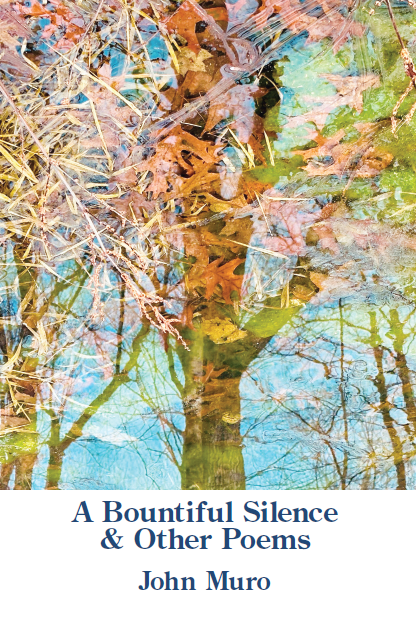
Reviews of A Bountiful Silence & Other Poems
“A Bountiful Silence & Other Poems is a study in precision, patience and perception…his verse, both painterly and musical, balances the sensory with the spiritual, demonstrating how attention itself can be an act of devotion…Muro’s craft is notable for its consistency of tone and precision of imagery…the sensory detail here is extraordinary…His art…chooses calm over clamor, detail over spectacle, sincerity over irony…What emerges is a body of work that invites reflection rather than reaction, a poetry that teaches us to pause, breathe, and listen to the earth’s slow, forgiving rhythm…Its beauty lies not in what is said, but in what hums softly beneath the saying, the quiet enduring heartbeat of his world.” The Hemlock Journal (Click Here to Read the full Book Review)
“The flow of the words and ideas evoke beautiful imagery of nature…and thought-provoking contemplation of the author’s intent…These poems will remain in thought long after being read…A beautiful and meaningful collection indeed, both in the lyrical writing and the heartfelt sentiment of the content.”
International Review of Books
“Quiet, lyrical and deeply reverent…Muro offers a luminous meditation on silence, memory, and the natural world…the language is lush yet disciplined…each phrase carries a musical cadence, recalling the composers and painters who appear in his work. What arises is not flourish, but quiet conviction…Readers attuned to poetry rooted in nature and art will find much to admire here.”
The Prairies Book Review
“The breadth and depth of John Muro’s poetry collection…is wider and deeper than the heart itself, it is more than one’s heart can hold. That’s a good thing, as it awakens the deepest emotional tentacles in all of us – including quiet reverence, the power of nature, of art, and of the spirit…the poems open you up. Wide. Deep. Fully…Muro employs his mastery of language and observation…There’s reverence, comfort, healing, and a level of profound awareness in the author’s work. John Muro, like any good artist, has a deeply focused and keenly accurate lense on the human condition.”
Writers Shed Press
“A Bountiful Silence & Other Poems is a poetic balm for the weary soul…Each of the poems are as powerful and thought-provoking as the next…(this is) a stunning collection of poetry…A Bountiful Silence…brings the right amount of abundance and beauty back into this world to the soften the hard edges we face every day….This book is a master class in poetry. It is true art.”
MockingOwl Roost
About the Interviewer

Flipping through the chapters of life on a midsummer night, like a daydreamer’s charm, Abdullah Lakdawala is a socialite, a writing freak and a soul on fleek. He’s a staff writer & interviewer at The Hemlock Journal.



 The Hemlock Journal
Leave a comment